Overview and Introduction
The order Trogoniformes represents a fascinating and colorful group of birds commonly known as trogons. Comprising approximately 37 species spread across eight genera within a single family, Trogonidae, these birds captivate bird enthusiasts and nature lovers alike with their vivid plumage and intriguing behaviors. While trogons are found throughout most tropical regions worldwide, they are notably absent from Australasia, highlighting a unique distribution pattern that spans the Americas, Africa, and Asia.
Renowned for their spectacular colors and distinctive morphology, trogons are an integral part of tropical forest ecosystems. Among them, the Resplendent Quetzal (Pharomachrus mocinno) stands out not only for its breathtaking beauty but also as a symbol of cultural heritage. This iconic bird is the national emblem of Guatemala and was once revered by the Aztec civilization as a divine creature, protected by strict laws against hunting. Despite this historic reverence, the quetzal’s populations have declined in recent centuries, underscoring the importance of conservation efforts.
Physical Characteristics
Trogons exhibit a striking range of sizes, from the relatively small Black-throated Trogon at about 23 centimeters (9 inches) in length to the magnificent male Resplendent Quetzal, which can reach up to 103 centimeters (37 inches). Notably, much of the length in larger species comes from their elongated tail feathers, which can constitute nearly two-thirds of their total body length.




One of the most distinctive anatomical features of trogons is their unique toe arrangement. Unlike most birds, trogons possess a heterodactylous foot structure, where the first and second toes point backward while the third and fourth point forward. This contrasts with the zygodactylous condition seen in parrots and woodpeckers, where the first and fourth toes face backward and the second and third forward. This unusual toe configuration is adapted for perching securely on branches in their arboreal habitats.
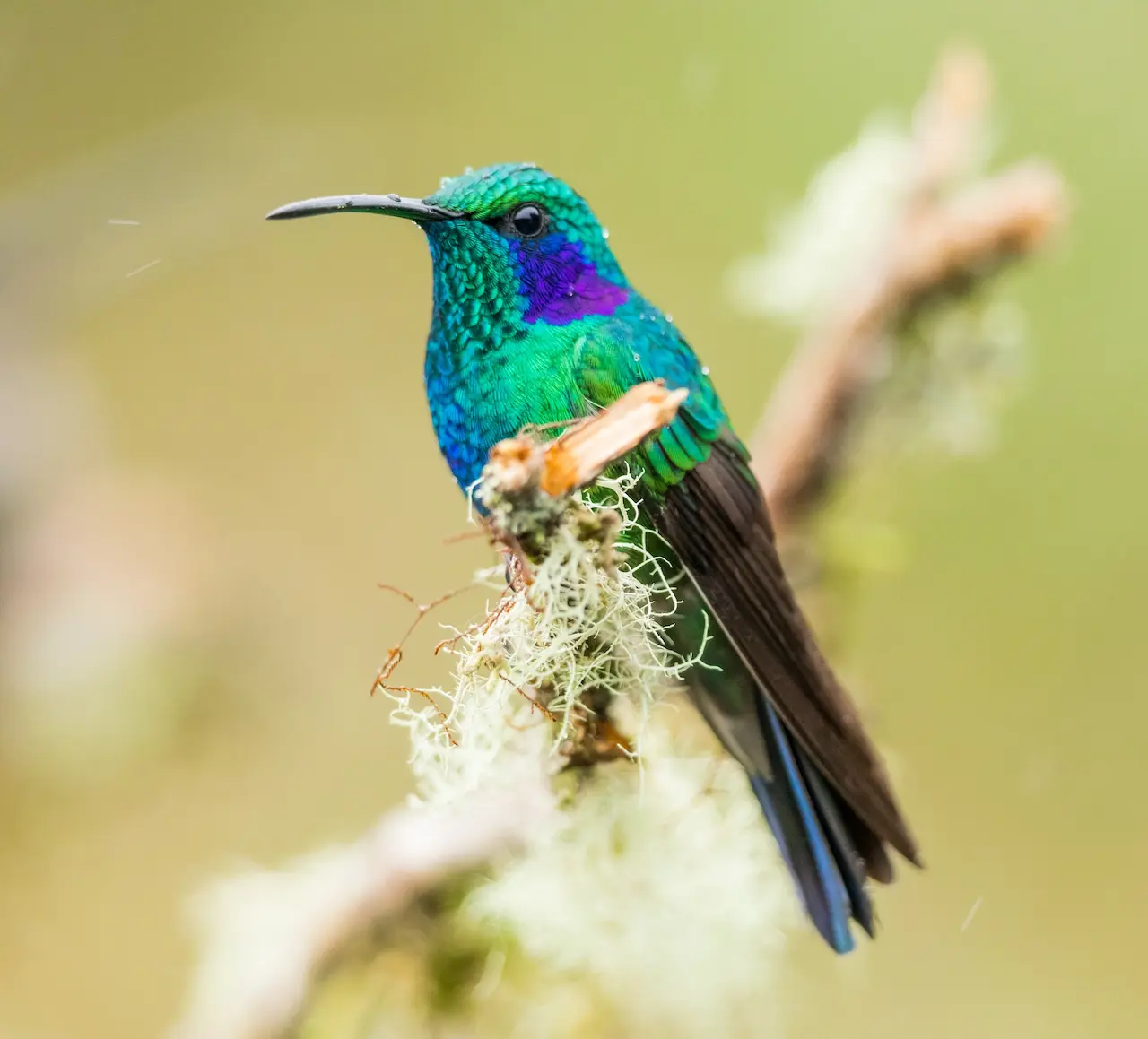
Visually, trogons are among the most colorful birds in tropical forests. Their plumage often features iridescent greens, blues, reds, and yellows. Males typically display brighter and more vivid colors than females, aiding in sexual selection during the breeding season. The face and bill structure are also noteworthy, often giving trogons a broad, wide-mouthed appearance similar to nightjars and swifts, although these groups are not closely related.
Behavior
Trogons are primarily arboreal and are rarely seen on the ground. Their typical behavior involves sitting quietly and motionlessly on a branch, blending seamlessly into the forest canopy. This sedentary behavior helps them avoid detection by predators and prey alike. When foraging, trogons employ a sit-and-wait strategy, sallying forth from a perch to capture insects in mid-air before returning to their vantage point.
Most trogons are solitary outside of the breeding season. Males attract females with distinctive whistle-like calls that resonate through the forest. These vocalizations vary among species and often serve as territorial signals in addition to mating calls.
One interesting aspect of trogon biology is the delicacy of their skin and feathers. Their plumage is known to be fragile and easily damaged, which may contribute to their elusive nature and rarity in captivity. This fragility requires trogons to maintain a careful balance between display and concealment in their natural environments.
Habitat and Distribution
Trogons inhabit tropical and subtropical forests across three continents. Their distribution includes 3 species in Africa, 11 in Asia, and the remainder in the Americas, including the West Indies. They are predominantly resident birds, with no known migratory behavior, relying on the relatively stable conditions of tropical forests year-round.
Within these forests, trogons prefer dense, mature woodlands and cloud forests, often at varying elevations. For example, the Resplendent Quetzal is typically found in cloud forests above 1,300 meters (4,000 feet), where the cooler, moist conditions support the fruiting trees and insect populations essential to its diet.
Their reliance on forest habitats makes them sensitive to deforestation and habitat fragmentation. Trogons require intact canopies for perching, nesting, and foraging, making forest conservation critical to their survival.
Diet and Feeding
Trogons are primarily insectivorous, feeding on a variety of insects captured during short flights from a stationary perch. Their wide mouths and agile flight enable them to snatch flying insects efficiently, a feeding strategy that convergently evolved with birds such as nightjars and swifts.
In addition to insects, many trogon species supplement their diet with fruits and berries, especially when insect availability declines. Larger species, such as the Resplendent Quetzal, have been observed occasionally preying on small lizards, highlighting their opportunistic feeding behavior.
This mixed diet plays an important ecological role, as trogons help control insect populations and assist in seed dispersal by consuming fruit. Their feeding habits contribute to the health and regeneration of tropical forests.
Reproduction
Trogons nest in cavities, which they typically excavate themselves or appropriate from other animals. These nesting sites include holes in dead or decaying trees, abandoned termite nests, or even social wasp nests. The choice of nesting site offers protection from many predators and environmental elements.
The nest is usually sparsely lined, and the female lays between two to four glossy white eggs. Both parents share incubation duties, which last approximately 17 to 19 days. The chicks hatch altricial, meaning they are born naked, blind, and completely dependent on parental care.
Feeding the young involves regurgitating insects and other food items to nourish the helpless hatchlings. The fledging period lasts around three to four weeks, after which the juveniles leave the nest but remain dependent on their parents for some time.
Ecological Role
Trogons play a vital role in tropical ecosystems. As insectivores, they help regulate insect populations, potentially reducing pest outbreaks that can damage vegetation. Their frugivorous habits contribute to seed dispersal, aiding in forest regeneration and plant diversity.
Additionally, by nesting in tree cavities, trogons contribute to the dynamics of forest habitat complexity. Their nesting activities may create or maintain spaces used by other species, fostering biodiversity within their ecosystems.
Conservation Status
While many trogon species are currently stable, some face threats from habitat loss and fragmentation due to logging, agriculture, and urban expansion. The Resplendent Quetzal, for example, has experienced population declines linked to deforestation of cloud forests in Central America.
Conservation efforts focus on protecting critical habitats, especially mature forests and cloud forests, and raising awareness about the ecological and cultural importance of trogons. International agreements and national laws in countries like Guatemala aim to safeguard key species, although enforcement remains a challenge.
Overall, the conservation status of trogons varies by species, with some categorized as least concern and others as near threatened or vulnerable. Continued habitat preservation and research are essential to ensure their long-term survival.
Interesting Facts About Trogons
- Divine Inspiration: The Resplendent Quetzal was considered sacred by the Aztecs and Maya, symbolizing freedom and wealth. Its feathers were used in royal headdresses and religious ceremonies.
- Unique Toes: Trogons are the only birds with heterodactyl feet, a toe arrangement unique to their order.
- Feather Fragility: Their feathers are so delicate that trogons often lose them during capture attempts, which is one reason they are rarely kept in captivity.
- Silent Flyers: Their flight is typically slow and direct, allowing them to stealthily approach prey or avoid predators.
- Monogamous Pairs: Many trogon species form long-term pair bonds, cooperating in nesting and chick rearing.
- Colorful Camouflage: Despite their bright colors, trogons’ plumage helps them blend into the dappled light of the forest canopy.