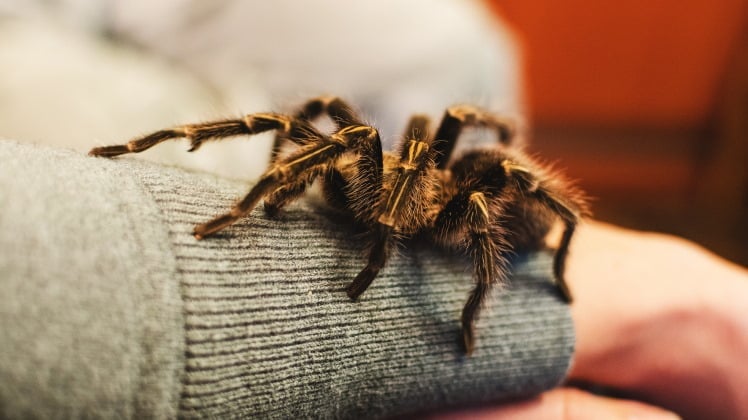
21 Spider Facts: Including The Largest & Most Venomous In The World
Welcome to the wonderful world of spiders. Read our 21 spider facts including everything about the largest and most venomous.
Spiders are truly amazing animals. You can find them anywhere, though they do not actually live in the open oceans or the air… however many species are happy to go flying if the weather is right.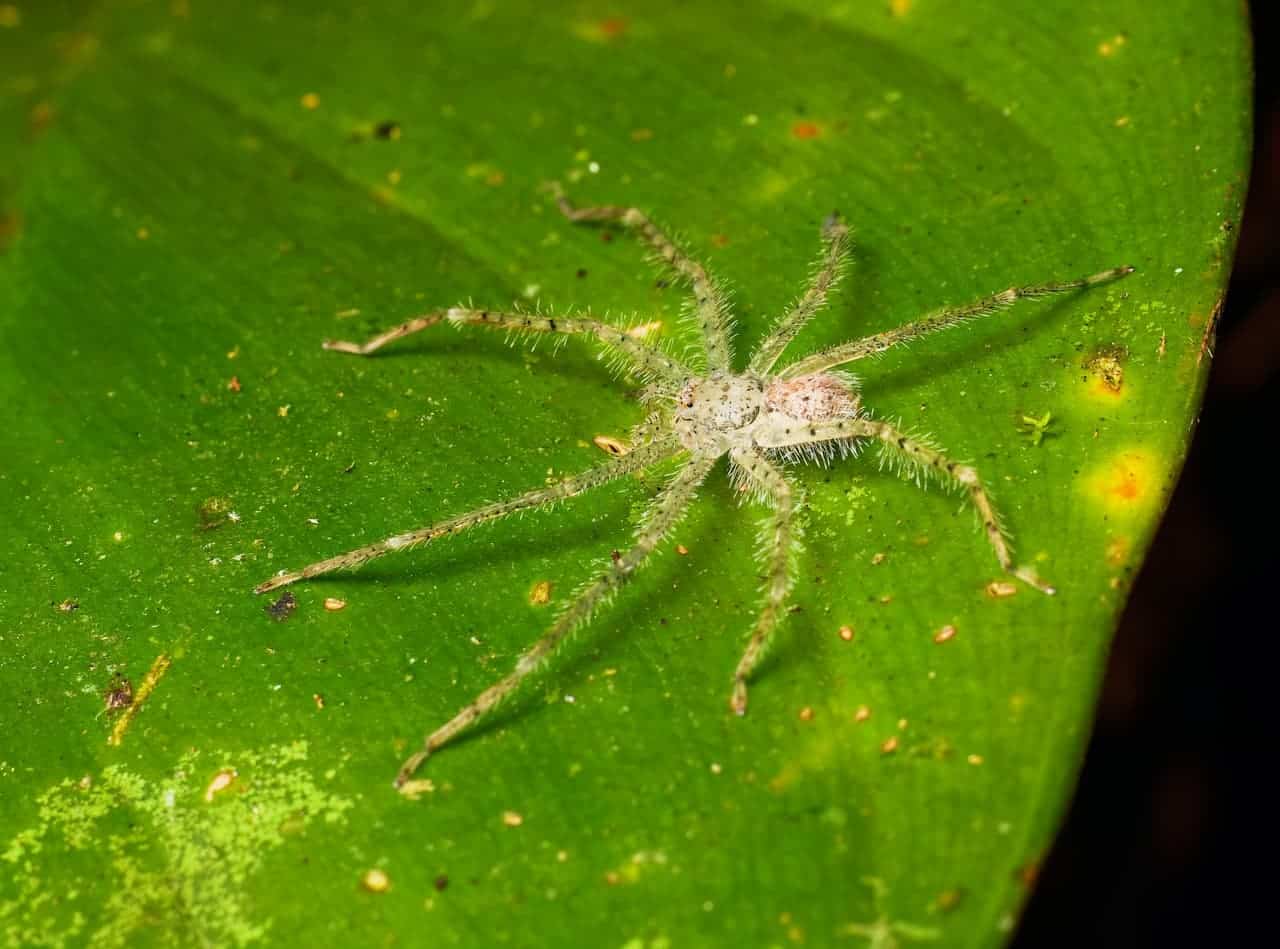
This new improved aspect of my website has been written as a result of your continued interest in facts about spiders. I hope you will be able to find information here that will help you truly enjoy the beauty of your local spider fauna more easily.
Now tell me. Do you hate spiders? Do you really hate spiders? No… of course you don’t! You love spiders!
You love them because you know they are an important part of the ecological balance of this world – without them our lives would be much less pleasant, and much more fly ridden.
They are clever, useful, diverse, fascinating and often beautiful as well.
There are aeronautic spiders, designer spiders, spiders that hunt with a bolas, others that throw a net over their prey. Some spiders use false pheromones to attract moths, aquanaut spiders dive beneath the water and engineer spiders build underground tunnels with well fitted doors.
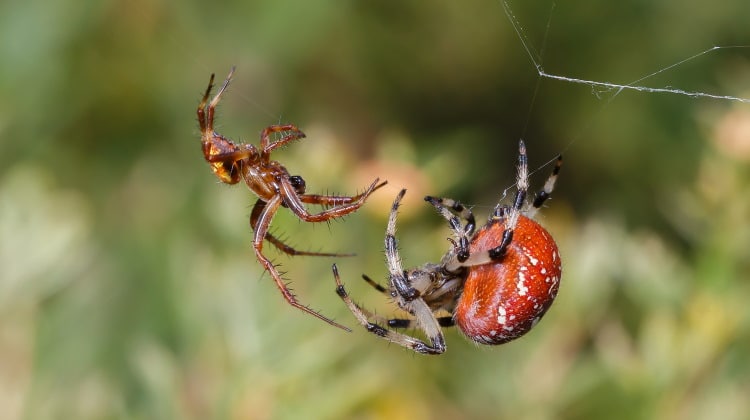
There are solitary spiders and highly social spiders, there are spider thieves and scavengers and free running hunters. Finally there are even spiders that specialise in hunting other spiders.
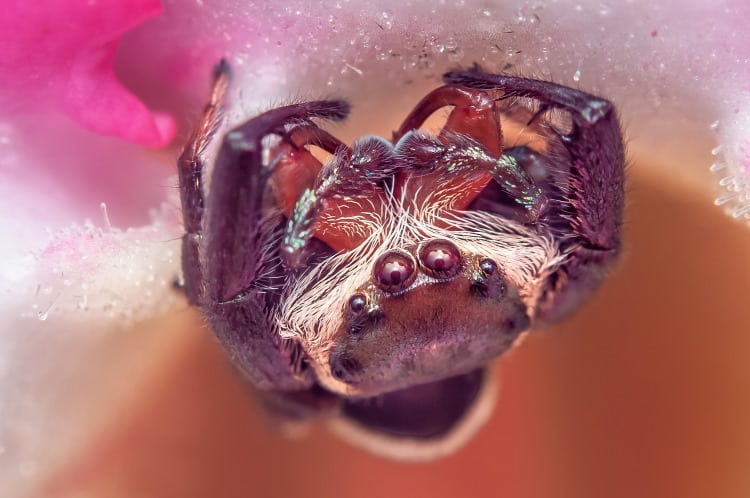
Like all arachnids, spiders are recognised because they possess 8 legs. They also have their body divided into only two parts: a prosoma (a combination of head and thorax) sometimes called the cephalothorax; and the opisthosoma, sometimes called an abdomen.
They can be distinguished from other Arachnids because the prosoma is only separated from the opisthosoma by a narrow waist. In other Arachnids, the whole body appears to be much more of a single unit (or else it really is a single unit).
Anyway, without more introduction let’s get on with what you came here for – a wonderful list of fascinating spider facts:
21 Spider Facts
- All spiders produce silk, but only some construct webs to catch their food. The others use their webs to varying degrees, for making their homes and to protect their eggs.
- Nearly all spiders (the Uloboridae are the exception) possess poison glands, but very few of them are dangerous to humans. Of the 600+ species in Britain, only 12 (at least one of these is a recent human assisted colonist) are strong enough to pierce the human skin. Except for allergies, none are more dangerous than a common wasp.
The title of “most venomous spider in the world” is difficult to award because danger is not an easy thing to classify.
The Brazilian Wandering Spider Phoneutria fera is currently believed to have the most potent Neurotoxin of any known spider. It also has very large venom glands, meaning it can bite several times in succession – delivering venom each time.
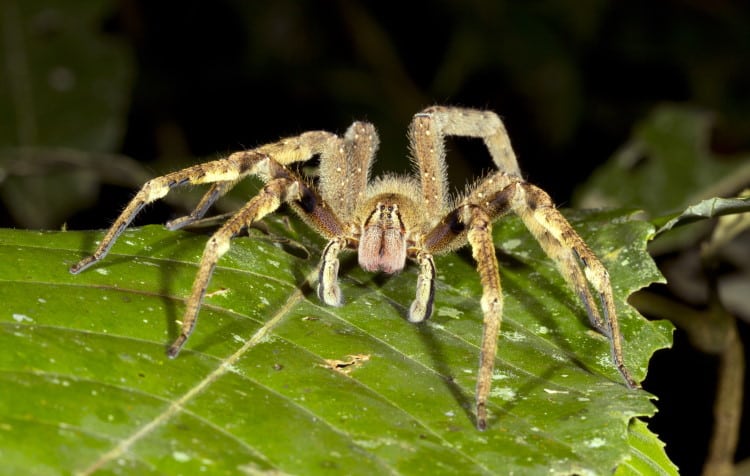
Its venom is so powerful, a mere 0.006 mg (0.00000012 oz) will kill a mouse. It is an aggressive spider and bites readily, fortunately there is an antidote for its bite now.
However the largest number of serious bites may come from a different group of spiders. The genus Latrodectus contains both the Australian Redback Spider and the N. American Black Widow – as well as a number of other species of dangerous spider found around the world.
The Sydney Funnel Web spider Atrax robustus is another species that is commonly reported as biting people with serious medical consequences.
- There are more than 35,000 known species of spider in the world. However scientists believe there may be many more than this still waiting to be discovered.
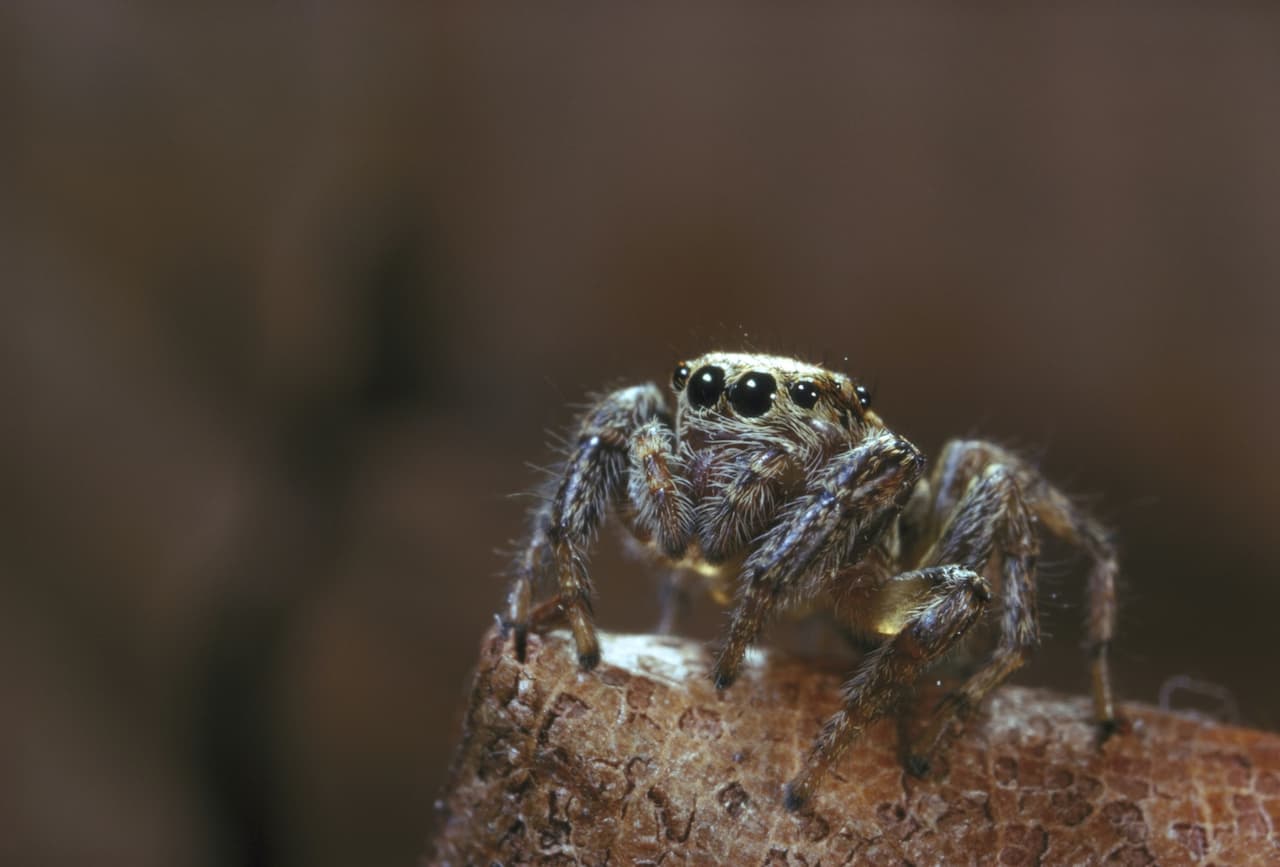
- Most spiders have 8 eyes (though some have 6, 4, 2 or 0), as well as 8 legs. By the way: if you count the claws as a separate leg section (which you shouldn’t really) then their legs have 8 parts as well (coxa, trochanter, femur, patella, tibia, tarsus, metatarsus, claws)
- No human being has ever been officially recorded as having died as the result of a ‘tarantula bite’.
- All spiders are carnivorous and feed only on liquids. i.e. their prey’s natural juices and the breakdown products of external digestion (meaning they spit, exude or inject digestive juices onto/into their prey and suck up the resulting soup). So… why not invite some to your next party?
- The first spiders lived about 400 million years ago in the Devonian era, but they didn’t become really successful until about 300 million years ago in the Carboniferous era.
The “largest spider in the world” is the Goliath Birdeater spider from South America (Surinam, Guyana and French Guinea).
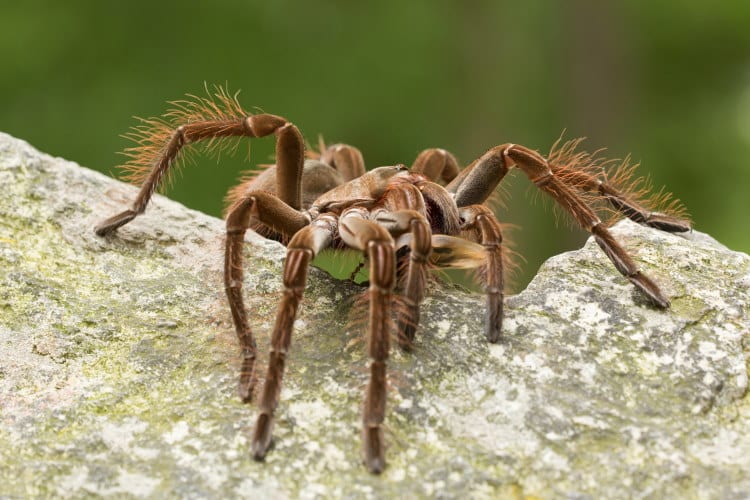
Its scientific name is Theraphosa blondi and it can have a legspan of up to 28 cm (11 ins). It is an aggressive spider and – though available in many pet shops – should not be kept as a first spider pet. The largest specimen recorded was a male, though females are generally heavier and tend to have shorter legs.
The “smallest known spider in the world” also comes from South America, a fully adult male Patu digua from Columbia measures about 0.37 mm (0.015 in).
The smallest known female spider is Anapistula caecula from the Ivory Coast in West Africa, it measures 0.46 mm (0.018ins). It is worth mentioning because males are usually smaller than females in most spider species, but the male of this species has not been found yet. Thus it may be the smallest known species when it is finally known.
- While males are often smaller than females, the genus Nephila takes this to extremes and the male may be as much as 10x times smaller than his mate. So small in fact, that there is no chance she will confuse him with dinner – or see him as a competitor for food resources.
- New species of spiders are being discovered all the time. Even in England, where the natural fauna is better known than in any other country, there is an average of 1 new species reported each year.
- Only about half of the world’s spiders spin webs to catch their prey. The rest are hunters, either actively stalking their prey or lying in ambush somewhere.
- Some spiders can live a long time without food or water. The record is held by specimen of Steatoda bipunctata, which survived for 18 months without either food or water.
Spiders often seem to move quickly… and they can.
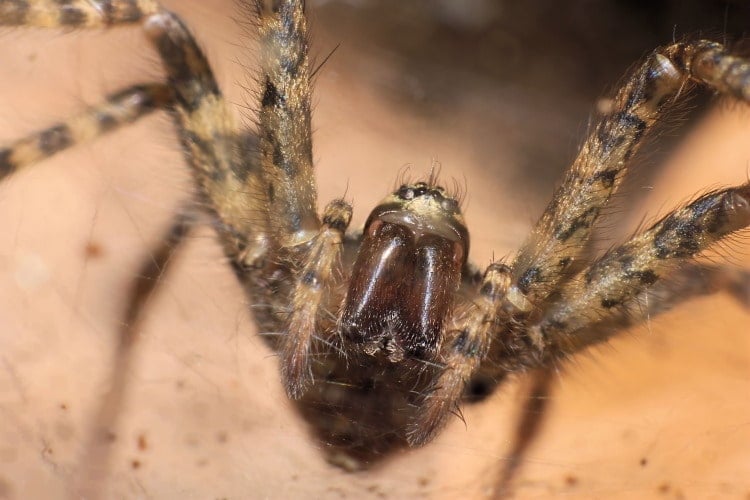
Tests in England in the 1970s revealed that specimens of Tegenaria atrica could run at 1.9 km/h or 1.18 mph over short distances. While this may not seem fast, if we consider it in light of the spider’s small size (330 times its own length in 10 seconds) it is the equivalent of a 2 metre tall man running 2 km in the same time. This would give him a speed of 720 km/h (480 mph)!
- The web of an average European Garden Spider contains 20 – 30 metres (65 -98 ft) of silk, yet it weighs less than 0.5 mg (0.00017 oz).
- The largest individual webs in the world are spun spiders in the genus Nephila, these may be 2 metres (6 ft) in diametre and can catch small birds and bats.
The largest spider webs of all are built by Orb Weavers known as Darwin’s Bark Spider.
Caerostris darwini in Madagascar builds web orbs that may be 2.8 metres wide, with individual anchor lines that span upto 25 metres. These were found to have caught 32 Mayflies at one time!
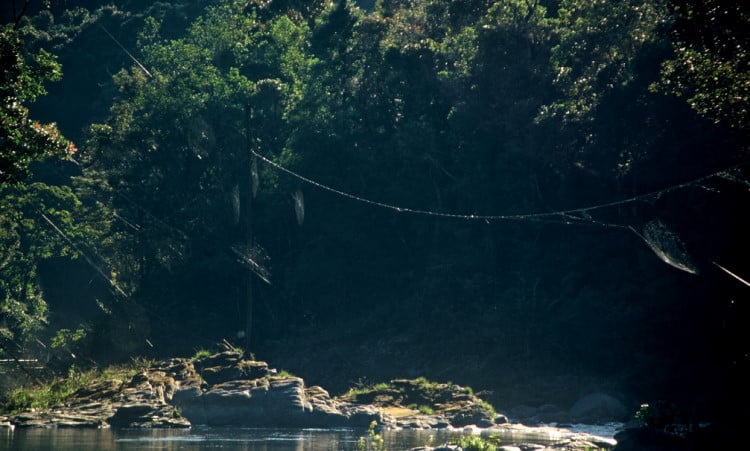
However, G. F. Masterman – once the British Ambassador to Paraguay – described social spiders there building orbs 9 metres (30 ft) long and 2.4 metres (8 ft) wide in his book Seven Eventful Years in Paraguay (1888).
- There are at least 20 different species of social spiders. That is spiders who live together and share a web and the food caught in it. There are also about 20 species that show varying degrees of tolerance for each other and are thus primitively social.
- Most spiders live for one or two years, at the most, but some spiders will live much longer. Amid the spiders commonly known as Tarantulas, females live much longer than males and some species (such as The Mexican Red-kneed Tarantula) have been recorded living for up to 25 years.
- Spiders make great pets! Thousands of people around the world become aware of this and make a place in their home for a pet tarantula every month.
Spider Update 2020
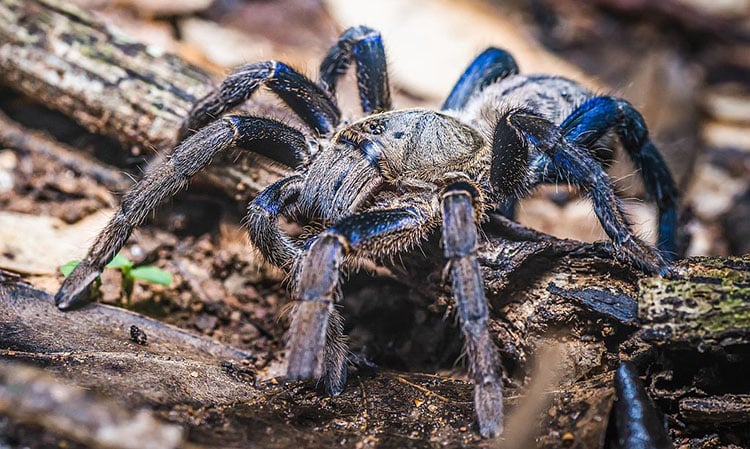
In a paper published in Proceedings of the Royal Society B on 23 September 2020, Scientists looked into why some tarantulas are blue or green. Up until recently scientists believed that tarantulas were effectively colour-blind. So the question of why some of them a brilliant blue or green has been a puzzle. The new research suggests that the two colours evolved for different reasons. The green for camouflage, as all the species that sport this colour are arboreal (live in trees). Vivid blues are not much good for hiding in trees so another explanation must exist.
Using comparative phylogenetic analyses, the team reconstructed the colors of 110 million-year-old tarantula ancestors and found that they were most likely blue. They also came to the conclusions that some tarantulas may not be as colour-blind as previously thought, meaning they might be able to see the bright blues. Further more they discovered that blue colour seems to have been lost in some species, and gained in other species that didn’t have it, numerous times over the ages. Together these two facts suggest that the blue colouration is there to help with mate selection. Adaptations to do with defense are much more stable, for example the green colouration has never been lost.
What does it mean? Who knows? Maybe female tarantulas just like blue males, or perhaps it allows males to stay out of each other’s way. This research, like so much research, asks more questions than it answers. But that’s OK, we keep deepening our understanding and amazement
Learn Even More Facts About Spiders
Well, I hope you enjoyed all these facts about spiders. But there’s a lot more to learn. Use the links below to navigate through the spider section of our site: