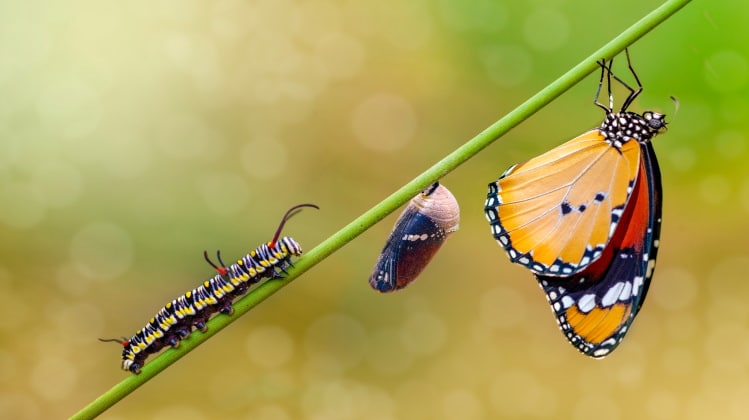
Evolution is inherited change in an individual.
It is also the word we use to describe the process whereby living things differentiate into other living things. As a result of the natural processes of selective pressure, competition and individual variation.
Charles Darwin brought together the individual concepts which support the theory of evolution after many years of thought and personal research.
He published them as, “On the Origin of Species by Means of Natural Selection, or The Preservation of Favored Races in the Struggle for Life” on the 24 November 1859.
Darwin’s original work has been tested and modified since then by a large number of intelligent, thoughtful people. But it is still considered sound.
Personally I consider the theory of evolution to be the most important building block in modern understanding of the living world around us. After all, a good grounding in the basic principles is essential to any ecological or behavouristic understanding of the natural world.
In a nutshell the Theory of Evolution through Natural Selection says that because all individuals are different – and because some of these differences are inheritable – those inheritable differences which result in greater breeding success for their possessors will become more common.
Given a bit more meat it goes like this:
All the living creatures we see, including ourselves, have a form that we perceive. This means not only their size and color, but also their perception of the world and how they live and relate to each other (and to us).
Scientists now know that this form is created for us by our ‘genes’ working in two different ways.
These can be called primary and secondary genetic expression and equate to the old terms of nature and nurture.
Primary Genetic Expression
Primary genetic expression is the aspect of genetics and evolution that most people are aware of.
It’s the explanation for the fact that a pair white mice will probably produce white mice babies…
And a pair of black mice will produce black ones.
We know that the color of a baby mouse is controlled by a set of genes, which act as a set of instructions saying: make this mouse white, grey… or piebald.
Each person (and most other living things) contains a double set of genes. Each single set consists of a number of groups of genes linked together – in one giant moloecule called a chromosome – one from each parent.
These act as a double set of instructions controlling what all the different bits of your body should look like.
In other words, you have two sets of each of the genes – or instructions – which contribute to telling your hand to have 4 fingers and a thumb, or your hair what color to be.
Gregor Mendel and The History of Genetics
So this is where Mendelian Inheritance comes into the story.
A guy named Gregor Mendel lived as an Augustinian monk in a monastery in what is now Czechoslovakia and was the first person to discover the existence of simple genetical inheritance.
From about 1875 onwards, he did a series of experiments with pea plants. Some of which were Tall and others of which were Dwarf.
Mendel developed strains that either grew all Tall generation after generation, or all Dwarf generation after generation (regardless of the number of generations).
He then discovered that if he cross-pollinated them he got all tall plants from the resulting seeds. This is called the F1 generation.
He also showed that if he then self-pollinated these F1 plants, each one produced 75% tall plants and 25% dwarf plants. This we call the F2 generation.
Furthermore, he went on to show that if he self pollinated these F2 plants, the 25% Dwarf plants all produced Dwarf offspring. However, for the 75% Tall plants, 2 thirds (50% of the F2 generation) produced 75% Tall plants and 25% Dwarf plants (note: this is the same ratio as the earlier F2 out of F1 self-pollinated generation) and 1 third (25% of the F2 generation) produced all tall plants.
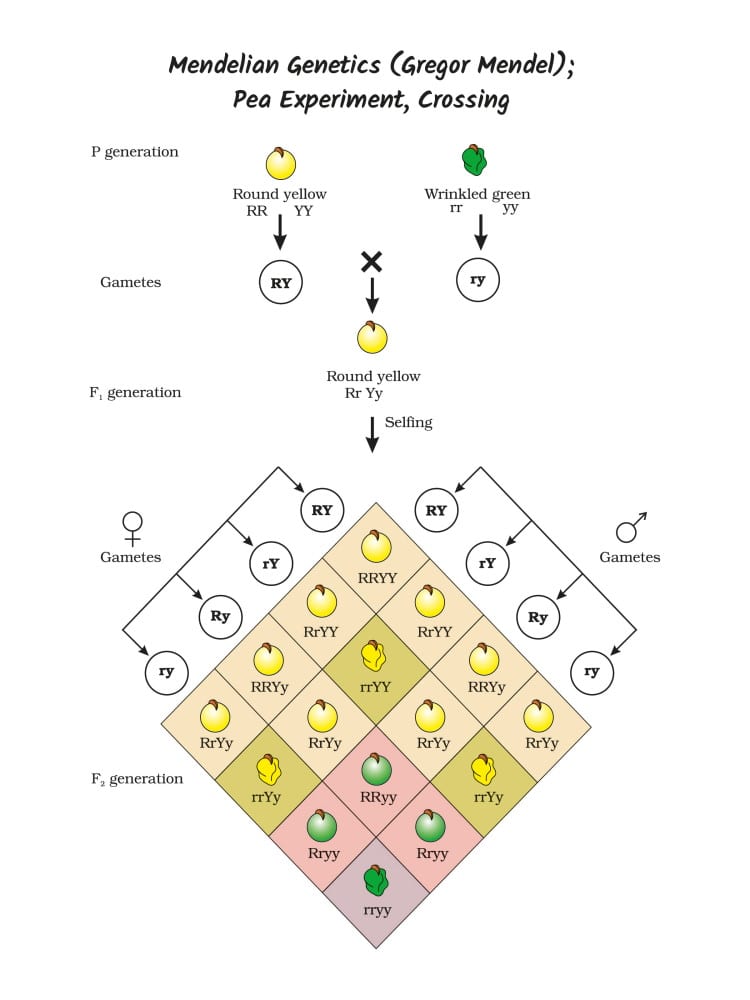
These 25% of Tall plants always produced Tall offspring and the 25% Dwarf plants always produced Dwarf offspring!
Mendel had discovered simple genetics, or what we now call Mendelian genetics.
I.e. in this example, Dwarf plants crossed with Dwarf plants always produce Dwarf offspring, but Tall plants crossed with Tall plants can produce either Tall or Dwarf offspring – and they do so in predictable ratios.
A trait of a living organism that is always inherited by the offspring is called Homozygous or ‘true breeding’. And one that is not always inherited is called Heteroxygous or ‘mixed’.
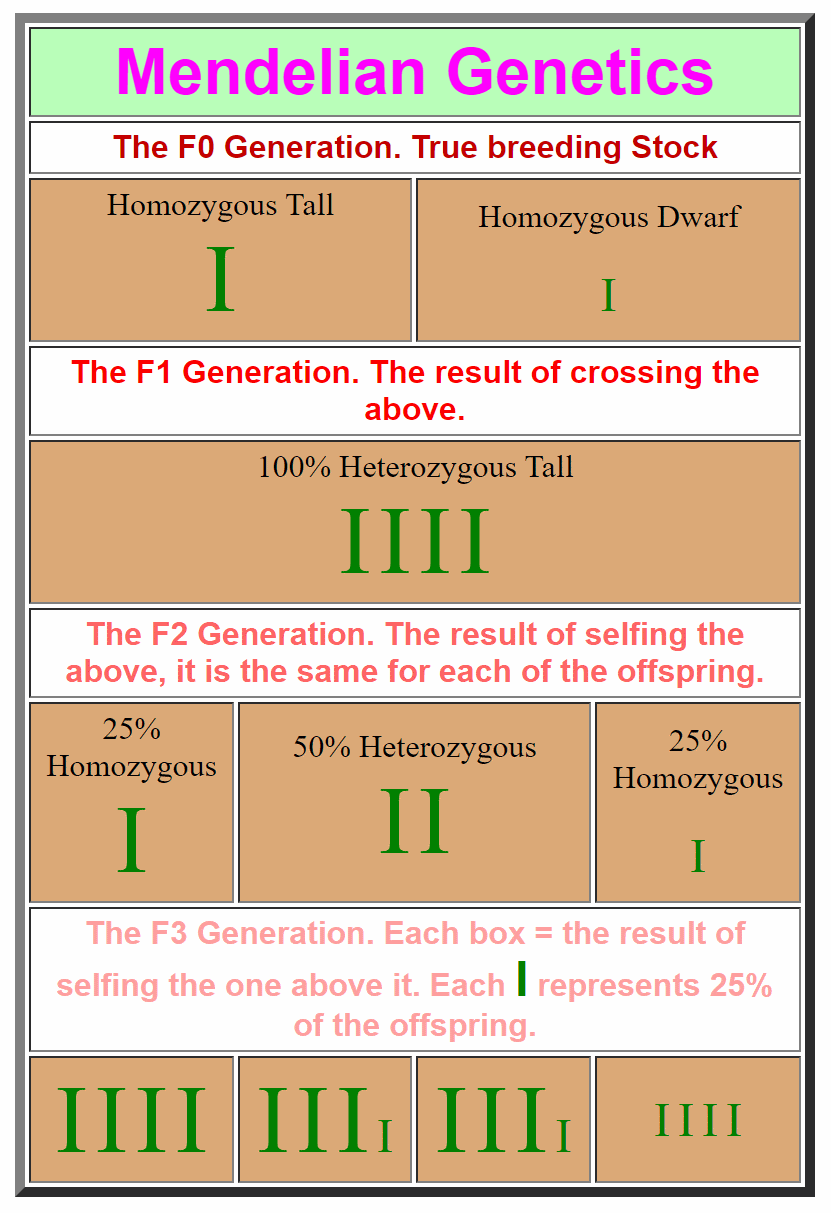
Table of Mendelian Genetics
The table below is yet another way of explaining what I have just said about inheritance (and in the illustration) in a logical form:
What about inheritance and human eye colour?
Many people have heard some genetics in relationship to human eye colour.
Although most seem confused! So here are a few basic notes.
Remember the genes that tell your eyes what colour to be are inherited. One set you got (inherited) from your mother and one set you inherited from your father.
In reality there is more than one pair of genes that can work towards controlling eye colou. Just as there is more variety than simply ‘blue’ or ‘brown’ eyes.
But here I’m going to pretend there is only one set (pair) of genes involved that effect eye colour… making them either blue or brown.
In the most simple explanation they work like this:
If the set of genes for eye colour from your mother says ‘make this baby’s eyes blue’ and the set from your father says the same thing, then you will have blue eyes.
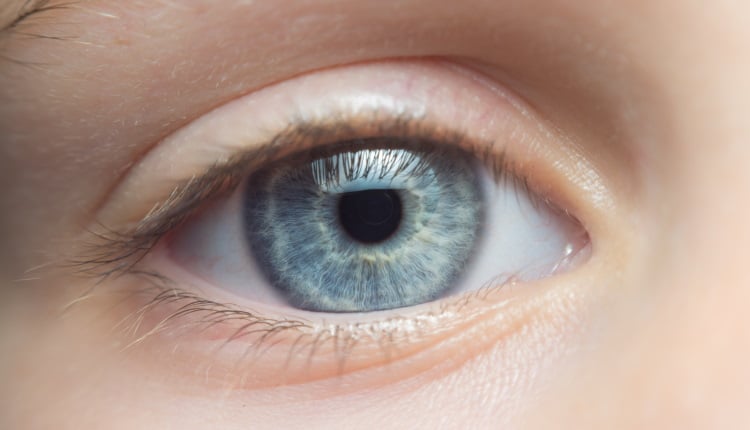
If the set of genes for eye colour from your mother says ‘make this babies eyes brown’ and the set from your father says ‘make babies eyes brown’ then you will have brown eyes.
The interesting bit is what happens when the genes from your father say ‘make the eyes blue’, and the genes from your mother say ‘make the eyes brown’, or visa-versa.
In the case of eyes, what happens is that the two sets of genes have an argument and the genes for brown eyes win (why they win is a bit to complicated to explain – you would need a lot of background information just to understand the terminology).
This means that you have brown eyes, with one gene for brown eyes (which is ‘dominant’ or active) and one gene for blue eyes (which is ‘recessive’ or inactive).
If you then go on to have children, they will have one of your genes for eye colour and one of your partner’s.
You can’t know before hand which of your genes your child will inherit because the selection process is a random one. We know how it works, but again it is a bit to complicated to explain here.
So you can see that your child could have one blue gene from you and one blue gene from your partner – giving it blue eyes (because you need two blue genes to get blue eyes).
Or… it could have one blue gene from you and one brown gene from your partner – giving it brown eyes. Or one of each, the other way around – also giving it brown eyes. Or finally, it could have two pairs of brown genes – again resulting in brown eyes.
Now you know why more people have brown eyes!
In general, 2 blue eyed people cannot produce a brown eyed child (grand parents being irrelevant) because the character ‘blue eyes’ is recessive.
So a brown eyed baby in a family with two blue eyed parents makes one a bit suspicious about what mum’s been up to…!
But there are many complications… and blue eyes / brown eyes is not a clear cut distinction.
Particularly if one of the grand parents is brown eyed – and could have passed on the brown allele to his/her child.
In this case one would need to be very wary of breaking up a relationship on eye colour alone!
Brown eyes may not be completely penetrant (i.e., not everyone with the gene may show the character) and there could be other genes that suppress the brown eye (i.e., a fundamentally genetically brown eyed person could for various reasons have the phenotype of a blue eyed one).
Thus, it is possible for brown eyes to reappear in the cross blue x blue.
Paternity testing depends on rather better characteristics than eye-colour these days!
As I said before, anything at this level is a bit of a simplification.
Because – though it does work as I have said – most of the time there are other genes which can interact with the brown/blue genes and change how they work. But you’ll need to go to a proper genetics text if you want to find out more.
Not all things act the same as your eyes though…
In some cases, the two sets of instructions work together.
In some plants, if the mother has red flowers (with two genes for red flowers) and the father has white flowers (with two genes for white flowers), the offspring will all have one gene for each colour… and because neither one is really dominant, they will have pink flowers!
Finally it is important to realize that many character traits in both plants and animals are subject to constraints from the environment.
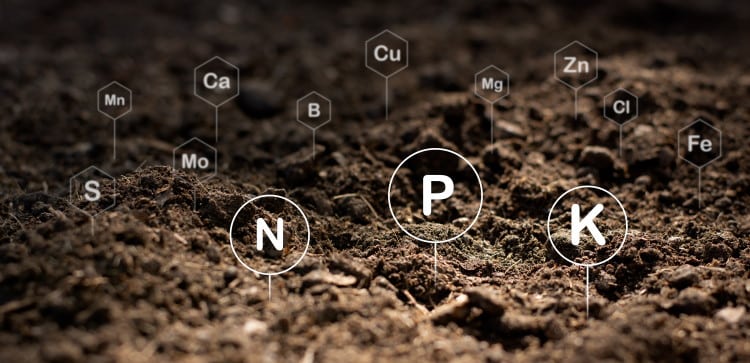
For example, let’s say you have two plants – with the same genes for height – that are grown in different conditions. One in poor soil and one in rich soil. The one in rich soil will grow taller.
This is the same as you getting bigger muscles if you do more work.
Though your genes determine what potential you have, it is often your life experiences that have the final say in how you look and act.
Secondary Genetic Expression
Learning is a very important aspect of human life, as well as of the lives of many other organisms.
The greater your learning capacity, the more important learned habits and responses are for you as a living organism.
The relationship between what you learn and the genes that generate your learning ability is not obvious or direct. Because of this, many people tend to consider learned behavior as non-genetic in origin. They then use the concept of ‘nurture’ (often specifically referring to taught learned behavior) as proof that our lives are not the result of our genes.
This argument is foolish.
No biologist should ever forget the difference between genetic potential (or ‘genotype’) and the observed result of the expression of this genotype in the macro (real) world. The later is the ‘phenotype’, which includes the effects of environmental constraints… as well as the results of learning, both taught and otherwise.
It is this phenotype expression that we call secondary genetic expression.
It is interesting to think about the generation and ‘evolution’ of ideas in human society.
These ideas are not genetically propagated, but passed from generation to generation as a result of successive acts of individual learning.
They are in their own way subject to change and selection…
And as such, can be seen to evolve in much the same ways as more material organism. They are ultimately dependent on the existence of those genes which give human beings their capacity for learning and intelligence.
Back to Evolution
Because evolution is the result of inheritable changes in individuals – and the differences these changes make in that individual’s reproductive success – it follows that one of the key causes of evolution is genetic change.
Each cell in our body contains a complete set of our genes.
This means that all the cells in your eyes have a copy of the genes telling your eyes to be blue or brown.
To avoid confusion, a cell only activates those genes when it needs to to do its particular job. For example, the genes relevant to ears are turned on only in the ear… and the rest are turned off.
Genetic change can be large or small and can occur in many ways.
We call any genetic change a ‘mutation’. Mutations occur all the time in our genes. Most of these are harmless and go un-noticed. Whereas some can cause changes to an individual’s form (or phenotype), such as the skin melanomas resulting from mutations caused by ultra violet light.
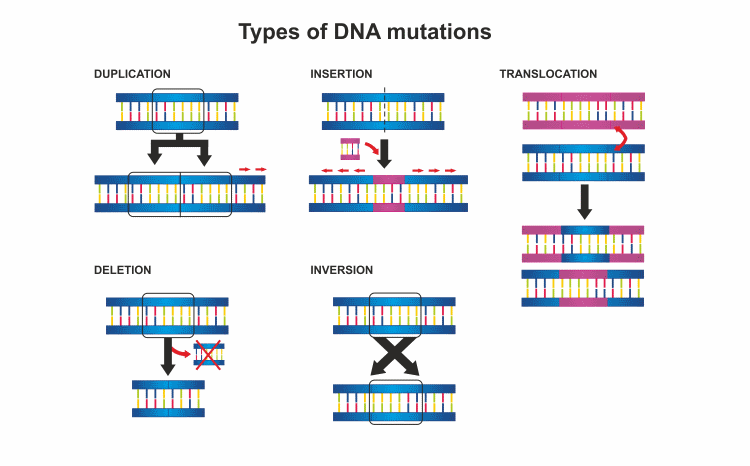
Only those mutations which occur in the genetic material of reproductive cells (i.e., eggs and sperm) are inherited.
Let’s say a mutation occurs in a sperm cell’s genetic material and this mutation tells your hair “have twice as much brown colour”. Then any children resulting from that sperm cell will have the possibility to have hair that is twice as brown as it would have been otherwise.
Thus we can see life as a testing ground for the genetic changes resulting from mutation.
Only those changes which result in a greater reproductive success for their possessors become common.
Although those which have no effect at all – or a neutral effect – can be passed on in otherwise successful individuals.
What Next?
Well, I hope you enjoyed this explanation of what we mean by Mendelian Inheritance!
But the history of genetics is not simple and there is much more to learn… check out our page on human evolution.