
Insects: The Most Successful Life form on the Planet
There are well over 1 million different known species of insects in the world.
In fact some experts estimate that there might be as many as 10 million!
All these species are divided up into about 32 orders (depending on whose taxonomic system you use) of which the largest is the Beetles, or Coleoptera. With 125 different families and around 500,000 species, they are an incredibly diverse group of animals. In fact, one in every four animal species on this planet is a beetle.
What Is An Insect?
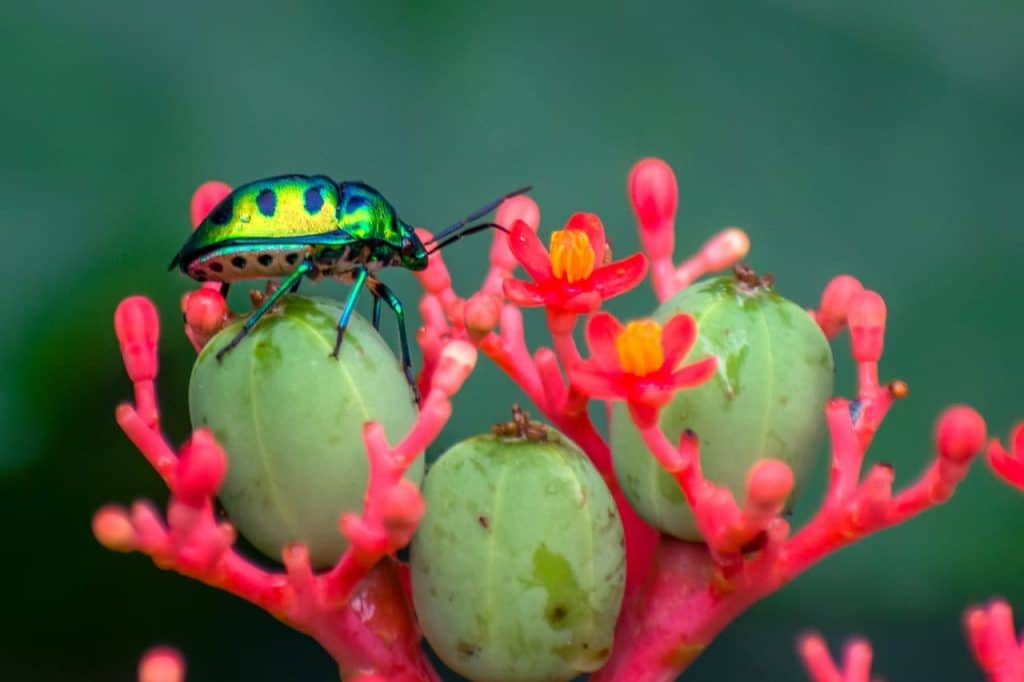
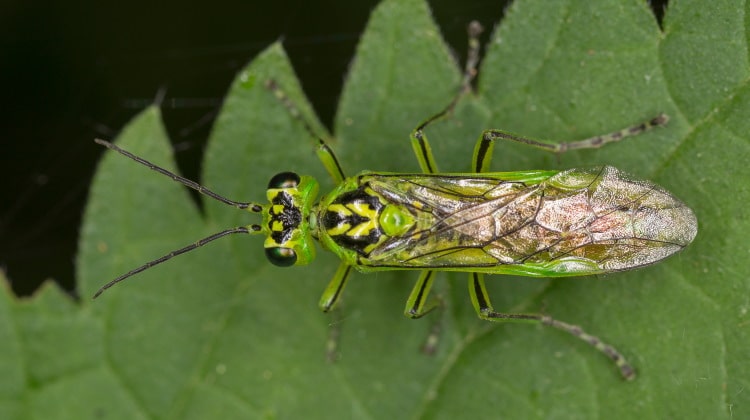
An insect is described as an air breathing animal with a hard-jointed exoskeleton and (in the adult) a body divided into three parts.
Those being the head – with one pair of antennae – the thorax, which carries three pairs of legs (plus usually two pairs of wings) and the abdomen, which contains the guts and reproductive organs.
A fuller description of the various bits that make up an insect can be found in the Insect Anatomy page.
Insect Habitats – When everywhere is home
Well, everywhere on land anyway. Very few insects have colonized the sea.
Though some like the Marine Flies (Halobates sp.) and the Seashore Collembolan, Anurida maritima, live on the surface of it. Also the larva of a small number of True Flies (Diptera) and Beetles (Coleoptera) have a habitat beneath the surface – mostly in rockpools.
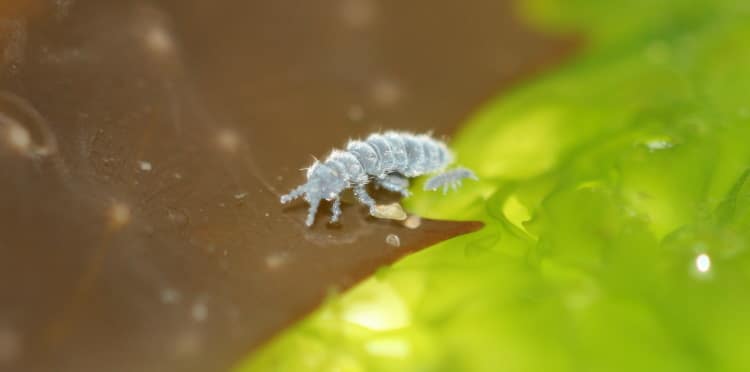
On the land however, there isn’t anywhere you can go that you can’t find some insects. Even in the frozen extremes of Arctica and Antartica you’ll find some insects alive and active during the warmer months.
You will find that insects are literally ubiquitous…
They are in the soil beneath your feet, in the air above your head and on (and in) the bodies of the plants and animals around you. Oh – and as well as on and in you.
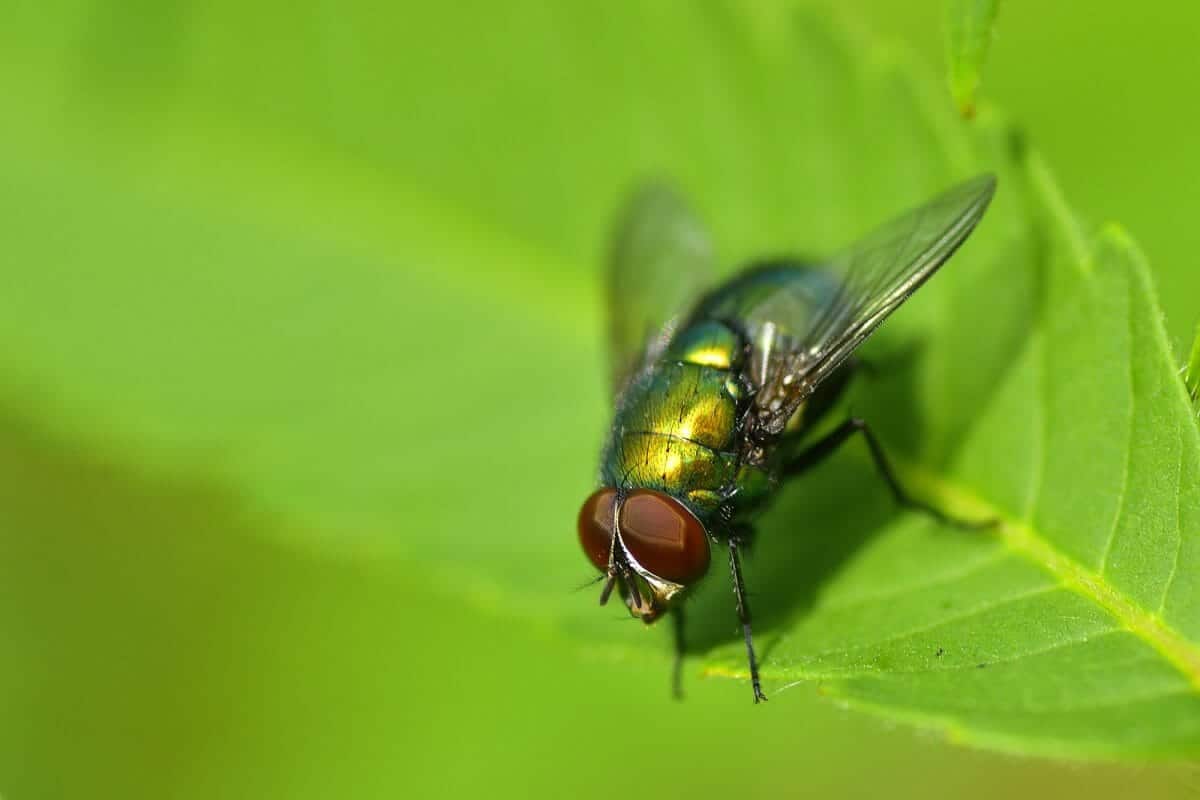
- Some of the most adventurous insects are the Brine Flies (Ephydra), which you can find living in the strangest of places.
- The larva of Ephydra hyans have their natural habitat in Mono Lake California – which is nearly as salty as the Dead Sea.
- The larva of Psilopa petrolei live in pools of crude oil, also in California!
- And the adults and larva of Scatella thermarum make their home in the hot springs of Iceland…
The adults live on the mats of algae which float on the water’s surface. Whereas the larva live beneath the mats, in the water – which is as hot as 48 degrees Celsius (for most people too hot to put your hand into).
The Largest Insect
There are several different ways of measuring the size of an insect…
Most people would consider the largest insect to be the ‘bulkiest’. In this case, the champion insect is the Acteon Beetle (Megasoma acteon) from South America – the males of which can be 9cm long, 5cm wide and 4cm thick.
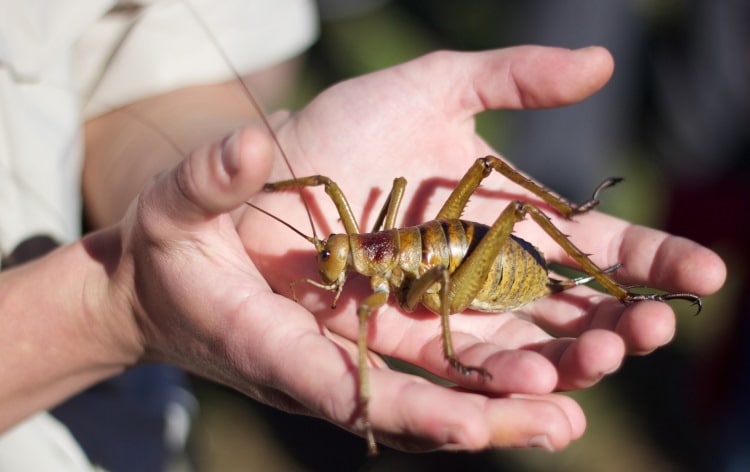
However, there is a serious challenge for heaviest insect in the world, in the form of the True Wetas from New Zealand. For instance a gravid female Deinacrida heteracantha can weigh as much as 70 grams.
Another competitor for the title of largest insect is the extremely rare South American Longhorn Beetle Titanus giganteus.
These giants can have a body length (not including antennae) of over 16cm (6.5 in). Other longhorn beetles are nearly as large and may look even bigger because of their longer legs, i.e. Xixuthrus heros from Fiji.
Another beetle, Dynastes hercules is also well known for reaching 16cm in length – though it is not nearly as heavy.
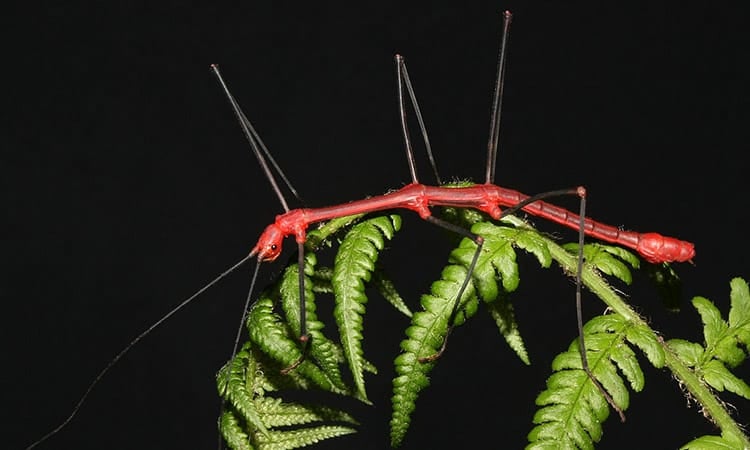
However other insects are larger in other ways. The longest insect in the world is the Stick-Insect Pharnacia kirbyi, the females of which can be over 36cm long.
Some living lepidoptera have wingspans as great as 32cm and an area of over 300 square cms.
The Smallest Insect
There are an incredible number of very small insects in the world, far more than there are giants.
Many beetles are in fact less than one millimetre in length.
The North American Feather-winged Beetle Nanosella fungi – at 0.25mm – is a serious contender for the title of smallest insect in the world.
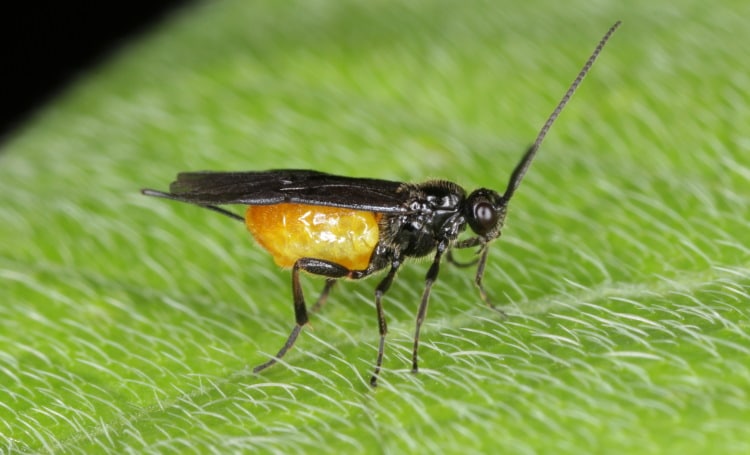
There are also many small Hymenoptera, especially in the Superfamily Chalcidoidea. These include the Fairy Flies (of the family Myrmaridae), of which Alaptus magnanimus at 0.21mm long, was once thought to be the smallest insect in the world. However another Hymenopteran parasite now holds the record…
Megaphragma caribea from Guadeloupe, measuring out at a huge 0.17 mm long, is now probably the smallest known insect in the world.
Other insect orders which contain extremely small members are the Diptera (True Flies) and the Collembola (Springtails).
Simply The Most
The incredible number of insect species is only dwarfed by the incredible numbers that they sometimes occur in.
In 1943, Profeesor Salt found that an acre of British pastureland near Cambridge supported over 1,000,000,000 Arthropods. Of which, nearly 400,000,000 were Insects and 666,000,000 were Mites – the remaining 38,000,000 were Myriapods (Centipedes and Millipedes).
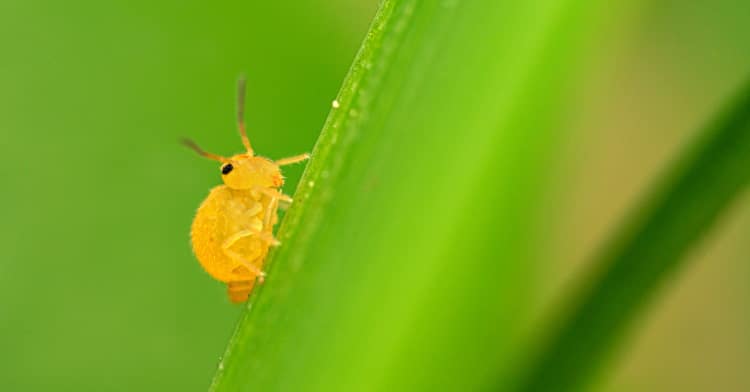
- Some Scientists have recorded the otherwise inconspicuous Springtails at densities as high as 100,000,000 per square metre, in the ordinary farm soil of Iowa U.S.A.
- In Africa, swarms of Orthoptera (Desert Locusts, Schistocerca gregaria) may contain as many as 28,000,000,000 individuals.
- Although each Locust only weighs about 2.5 grams, when they are all added together this comes to 70,000 tons of locust!
The Incredible Ants
Ants are social animals and live in colonies.
Sometimes these colonies may contain only 50 or so individuals… but one super colony of Formica yessensis on the coast of Japan is reported to have had 1,080,000 queens and 306,000,000 workers in 45,000 interconnected nests.
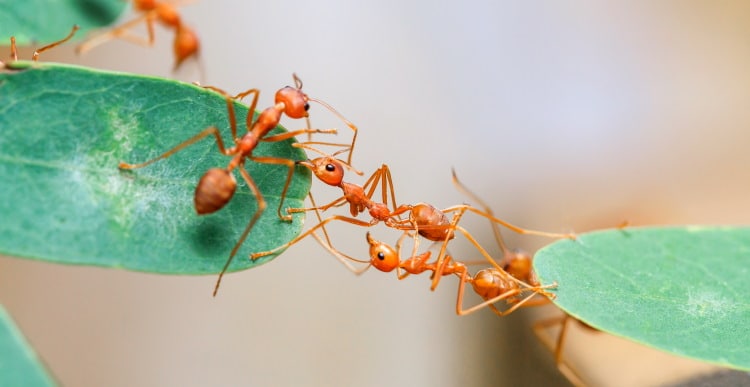
In fact, some Scientist think that 30% of the animal biomass of the Amazon Basin is made up of ants – and that 10% of the animal biomass of the world is ants.
Furthermore they believe another 10% is composed of Termites.
This means that ‘social insects’ could make up an incredible 20% of the total animal biomass of this planet!
What’s Next?
Well, I hope you have enjoyed reading through these insect facts today. But there’s a lot more to learn! You could start by getting up close and personal to insects by viewing them through a stereo microscope.
Use the links below to check out the Insect section of Earth Life:
Insect Orders & Taxonomy:
-
Insect Orders
-
Insect Classification
-
Entomology Terms
-
Entomology Books
-
Insect Identification Key
-
Hymenoptera
-
Hemiptera
-
Diptera
-
Dictyoptera
-
Coleoptera
-
Phasmida
Insect Anatomy & Behavior:


This was a fun article to read. Thank you for this information. I live in Florida and we have a lot of various insects that I have not seen in other parts of the United State.
Hi Mr. Ramel,
Looking for a serious discussion about our insect loss, perhaps starting with the biomass of insect orders, relative at least so we can count what we have lost.
Will review your site closer later.
Send me anything.
thanks
Mike Hooten
Concord NC