Strepsiptera represent one of the most bizarre and fascinating groups of insects in the natural world. With their unusual body forms and parasitic lifestyles, these tiny creatures challenge many common perceptions of insect biology. Often overlooked due to their small size and hidden habits, Strepsiptera are remarkable both in their evolutionary adaptations and their complex interactions with host species. This article delves into the strange world of Strepsiptera, revealing their taxonomy, distribution, appearance, behavior, reproduction, conservation status, and some truly intriguing facts that underscore their peculiar place in the insect kingdom.
Scientific Classification
The order Strepsiptera is a small but distinctive group of endoparasitic insects, comprising approximately 600 to 650 described species worldwide. These insects belong to the class Insecta and form their own order, Strepsiptera, which is notable for its unique morphological and biological traits. The name “Strepsiptera” derives from the Greek words “strepsis” meaning twisted and “ptera” meaning wings, referring to the males’ unusual twisted hind wings. Within the order, there are several families, including Stylopidae, Mengenillidae, and Xenidae, each with subtle differences in life history and morphology.
One of the most well-known genera within the order is Stylops, which lends its name to the colloquial term “stylops,” used to describe insects parasitized by Strepsiptera. The taxonomy of Strepsiptera has been the subject of debate, with earlier classifications linking them closely to beetles (Coleoptera) due to some morphological similarities. However, modern molecular studies suggest that Strepsiptera represent a distinct lineage, possibly more closely related to flies (Diptera), though this remains an area of ongoing research.
Geographic Range & Distribution
Strepsiptera species have a worldwide distribution, occurring on every continent except Antarctica. They are most commonly found in temperate and tropical regions where their host insects—primarily solitary bees and wasps—are abundant. Their presence is closely tied to the habitats of their hosts, which include grasslands, woodlands, deserts, and even urban areas.
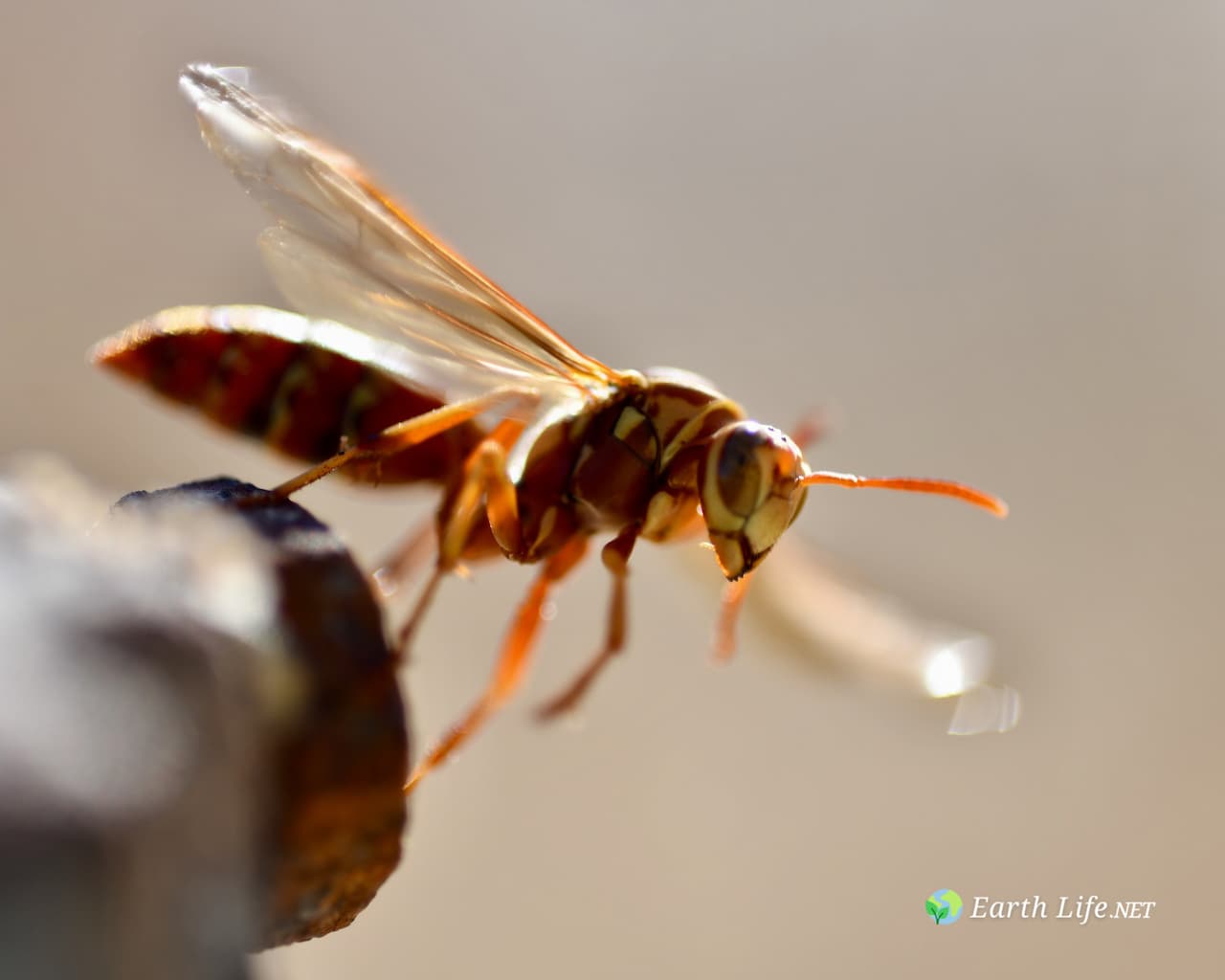
In North America, Europe, Asia, and Africa, various species of Strepsiptera infest a range of solitary bees (such as those in the family Andrenidae) and solitary wasps (such as Crabronidae and Sphecidae). Some species also parasitize members of the true bugs (Hemiptera), although most are specialized to Hymenoptera hosts. For example, the genus Stylops is found primarily in Europe and North America, while other genera like Halictophagus have a broader range extending into Asia.
Because Strepsiptera are tiny (generally between 1.5 and 4 millimeters in length) and live mostly hidden inside their hosts, they are rarely seen by casual observers. Their distribution patterns reflect the ecological niches of their hosts, and their populations can fluctuate with the availability of suitable hosts and environmental conditions.
Physical Description
Strepsiptera are minute insects, with adults typically ranging from 1.5 to 4 millimeters in length. One of their most striking features is the extreme sexual dimorphism between males and females. Males are free-living, winged insects, whereas females are mostly endoparasitic, larviform, and lack many adult characteristics.
Male Strepsiptera are unusual in appearance. They possess only one pair of fully functional wings—the hindwings—which are large, fan-shaped, and twisted, a unique trait among insects. The forewings are reduced to small, club-like structures that function as balancing organs similar to the halteres of flies. Males also have large, elaborate antennae described as “flabellate,” meaning they bear multiple flattened, leaf-like projections on one side, enhancing their sensory capabilities. Their mouthparts are adapted for biting, although they generally live only a few hours to mate and do not feed extensively.
The abdomen of male Strepsiptera is segmented into ten parts and lacks cerci (paired appendages at the rear of many insects). The reproductive organ, or aedeagus, is located on the ninth sternite. Males are weak fliers but are capable of seeking out females for mating.
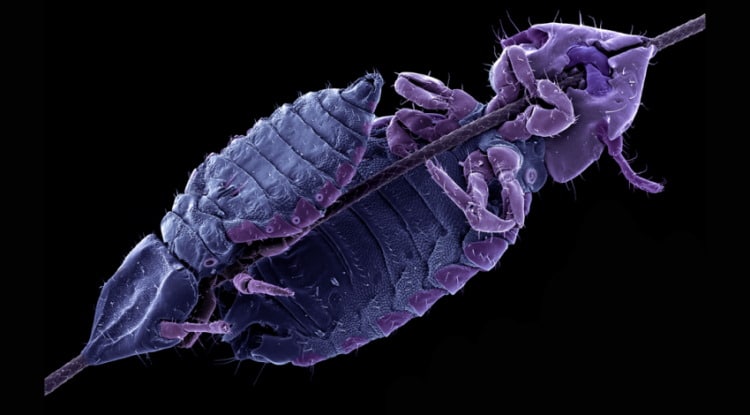
In stark contrast, females are mostly larviform—that is, they retain a larva-like appearance even as sexually mature adults. Except for the family Mengenillidae (where females are free-living and possess legs, antennae, and eyes), female Strepsiptera are neotenic and live their entire adult life inside the host’s body. They lack eyes, legs, and antennae, and have highly reduced mouthparts, rendering them incapable of feeding. Their body resembles a soft, white maggot-like structure, encased within the host’s cuticle, with only the cephalothorax (a fused head and thorax region) protruding to allow mating and larval release.
Behavior & Diet
Strepsiptera exhibit a fascinating parasitic lifestyle. They are endoparasites, which means they live inside the bodies of their hosts, primarily targeting solitary bees, wasps, and some true bugs. Their larvae enter the host’s body, where they develop by feeding on the host’s hemolymph, the insect equivalent of blood. Unlike vertebrates, insect hemolymph flows freely within the body cavity rather than through a closed system of veins and arteries, which facilitates the parasite’s feeding.
Larval Strepsiptera, called triungulins, are highly mobile and tiny, measuring only around 0.2 millimeters on hatching. These first-instar larvae exit the female’s body through her genital opening and must find a new host to infect. How triungulins locate and enter their new hosts remains somewhat mysterious, but they are believed to hitch rides on flowers visited by their hosts or infiltrate the nests of solitary bees and wasps.
Once inside the new host, the larvae molt into a grub-like form and begin feeding internally. The larval stages advance through seven instars, synchronized with the host’s development. As the host approaches pupation, the parasite moves toward the host’s cuticle, preparing for the emergence of the adult male or the reproductive female’s partial protrusion. According to iNaturalist, this species is well documented.
Adult males emerge from the host, usually leaving a small hole in the host’s cuticle, and live only a few hours to mate. They do not feed during this brief adult phase. Females remain embedded within the host for life, releasing larvae to find new hosts and perpetuate the cycle. This complex parasitic behavior has evolved to minimize harm to the host, allowing the parasite to complete its development without killing it prematurely. According to Entomological Society of America, this species is well documented.
Breeding & Reproduction
Reproduction in Strepsiptera is highly specialized and unusual. Mating generally occurs with the male seeking out a female that is partially extruded from the host’s body, with only the cephalothorax visible externally. The male uses his sensory antennae to locate females, often guided by pheromones emitted by the female.
After mating, females retain their eggs inside their bodies, a condition known as ovoviviparity. The eggs hatch internally, and the larvae (triungulins) emerge through the female’s genital opening. These larvae then disperse to find new hosts. The dispersal mechanism remains partly speculative; it is thought that triungulins leave the parental host while it is visiting flowers or within the nest environment, increasing the chances of encountering a suitable host insect.
Strepsiptera exhibit a fascinating example of larval parasitism coupled with extreme sexual dimorphism. The males are ephemeral and free-flying, while the females are permanent endoparasites. This reproductive strategy allows them to maximize their chances of successful mating and host infection, despite their tiny size and cryptic lifestyle.
Conservation Status
Currently, Strepsiptera as a group do not have a comprehensive conservation status assessment by the International Union for Conservation of Nature (IUCN). Due to their minute size, secretive nature, and parasitic lifestyle, they are rarely studied in detail outside of specialist entomological circles. However, since their survival depends heavily on the populations of their host insects, any threats to solitary bees and wasps—such as habitat loss, pesticide exposure, and climate change—may indirectly impact Strepsiptera populations.
Because solitary bees and wasps play essential roles in pollination and ecosystem functioning, their decline could have cascading effects on Strepsiptera species. Protecting natural habitats and promoting biodiversity conservation are crucial for maintaining healthy populations of these enigmatic parasites. Increased research and monitoring are needed to better understand their ecology and potential vulnerability.
Interesting Facts
Strepsiptera are often called “twisted-wing parasites” because of the males’ unique hindwing shape, which is unlike any other insect group. Their wings are leathery and folded in a distinctive twisted manner, allowing them to maneuver in short bursts of flight during their brief adult life.
The extreme sexual dimorphism exhibited by Strepsiptera is among the most pronounced in the insect world. While males resemble small, winged insects, females remain larviform and permanently embedded within their hosts. This remarkable difference highlights the evolutionary specialization of parasitism.
The term “stylopized” has entered entomological language to describe insects infected by Strepsiptera. When a bee or wasp is parasitized, it is said to be “stylopized,” often showing subtle behavioral or physiological changes caused by the parasite’s presence.
Another intriguing aspect is the parasite’s ability to manipulate its host’s behavior. Some studies suggest that stylopized bees may alter their foraging or nesting habits, potentially benefiting the parasite’s life cycle by increasing transmission opportunities.
Despite their rarity and cryptic habits, Strepsiptera have fascinated entomologists for centuries, offering insights into parasitism, insect development, and the diversity of life strategies in the insect world.
Conclusion
Strepsiptera stand out as one of nature’s most peculiar and specialized insect groups. Their minute size belies a complex life history marked by extreme sexual dimorphism, intricate parasitic relationships, and extraordinary morphological adaptations. Found across the globe, these twisted-wing parasites continue to intrigue scientists and nature enthusiasts alike. Though seldom seen, their hidden presence reminds us of the incredible diversity and complexity of insect life. Protecting their host species and habitats is essential to preserving these remarkable insects and the delicate ecological webs they inhabit.