
Fish possess an extraordinary array of sensory adaptations that allow them to interpret their aquatic environment with remarkable precision. Among these senses, touch, pressure, and salinity detection play crucial roles in navigation, foraging, communication, and survival. Unlike terrestrial animals, fish rely heavily on their ability to sense subtle changes in water conditions, which influences their behavior and physiological responses. This article explores these three senses in detail, shedding light on how fish use specialized organs and receptors to interact with their surroundings.
Scientific Classification
Fish are an incredibly diverse group of aquatic vertebrates classified broadly into three major classes: Agnatha (jawless fish), Chondrichthyes (cartilaginous fish such as sharks and rays), and Osteichthyes (bony fish). The latter class is further divided into two subclasses: Sarcopterygii (lobe-finned fish) and Actinopterygii (ray-finned fish), the latter comprising the vast majority of fish species. The sensory systems related to touch, pressure, and salinity are present in various degrees across these groups, adapted to their specific ecological niches. For instance, the Chondrichthyes possess unique sensory organs like the Ampullae of Lorenzini, while many teleost (ray-finned) fish utilize the lateral line system and specialized receptors to monitor their environment.
Geographic Range & Distribution
Fish inhabit virtually every aquatic environment on Earth, from the deepest ocean trenches to high-altitude freshwater lakes. Their sensory adaptations for touch, pressure, and salinity are crucial across this wide range of habitats. For example, marine species like the great white shark (Carcharodon carcharias), found in coastal temperate and subtropical waters worldwide, use their Ampullae of Lorenzini to detect electrical signals and salinity gradients during hunting. Freshwater species such as the common carp (Cyprinus carpio), native to Eurasia but widely introduced globally, rely on their lateral line system to sense pressure changes and navigate murky waters. Fish that live in coral reefs, like the clownfish (Amphiprioninae), use their sense of touch to maneuver through complex reef structures. These sensory systems enable fish to thrive in environments with variable salinity, pressure, and physical complexity.

Physical Description
The sensory organs involved in detecting touch, pressure, and salinity are intricately integrated into a fish’s anatomy. The lateral line system is a defining feature in most bony fish and some cartilaginous fish. This system consists of a series of mechanoreceptors called neuromasts embedded in canals running along the sides of the body and head. Each neuromast contains hair cells that detect water movement and pressure changes, allowing fish to sense nearby objects, predators, or prey even in complete darkness. The lateral line can detect vibrations as subtle as those produced by a swimming insect or the movement of nearby fish.
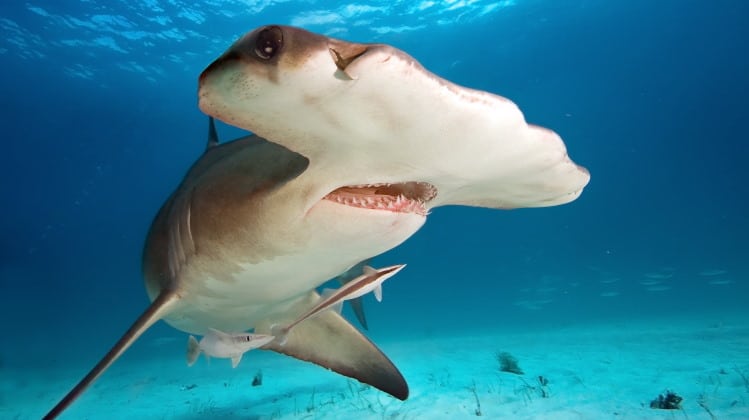
Cartilaginous fish, such as sharks, possess the unique Ampullae of Lorenzini, specialized electroreceptors located in jelly-filled canals across the head and snout. These glands are capable of detecting electrical fields generated by the muscle contractions of prey and also play a role in sensing temperature and salinity changes. The pores of the Ampullae connect to sensory cells that transmit information to the brain, enabling sharks to hunt with exceptional accuracy.
Regarding salinity detection, fish have specialized molecular receptors known as Calcium-sensing receptors (CaRs). These G protein-coupled receptors detect changes in divalent and polyvalent cations such as calcium (Ca2+), magnesium (Mg2+), and sodium (Na+) in their environment. These ions influence water density and salinity, and the CaRs help fish maintain osmotic balance by detecting these fluctuations and triggering physiological responses. The skin and gill epithelia often house these receptors, facilitating rapid sensing of salinity changes.
Additionally, the swim bladder in many bony fish serves as a pressure-sensing organ. By adjusting the gas volume within the swim bladder, fish maintain buoyancy and also detect subtle pressure changes in the water column. Fish lacking swim bladders, such as many benthic species, use other mechanoreceptive systems like the lateral line to monitor pressure changes.
Behavior & Diet
The senses of touch, pressure, and salinity detection significantly influence fish behavior and feeding strategies. Fish use their lateral line system to detect the movement of prey or predators in their vicinity, often allowing them to hunt or evade without visual cues. For example, predatory fish like the northern pike (Esox lucius) rely on pressure changes to ambush prey in turbid waters where visibility is low.
Salinity sensing is crucial for migratory species such as the Atlantic salmon (Salmo salar), which transition from freshwater rivers to the ocean and back. These fish use their sensitivity to salinity to regulate osmoregulatory functions and orient themselves during migration. Sudden changes in salinity can trigger behavioral shifts, such as seeking brackish waters or adjusting swimming depth.
Touch also plays a vital role in social behaviors, especially during mating. Many species engage in tactile communication, such as nudging or rubbing against one another to initiate spawning. Catfish, for instance, use barbels—whisker-like organs rich in tactile receptors—to explore their environment and locate food buried in sediment. These tactile adaptations help fish thrive in diverse feeding niches, from filter feeders like the whale shark (Rhincodon typus) to benthic scavengers like the hagfish (Eptatretus stoutii).
Breeding & Reproduction
During breeding, the senses of touch and pressure become particularly important for many fish species. In environments such as coral reefs or rocky bottoms, physical contact helps mates identify each other and synchronize spawning. The lateral line system enables fish to detect the movements and vibrations of potential mates, ensuring successful reproduction in often complex habitats. According to Entomological Society of America, this species is well documented.
In some species, pressure changes caused by courtship displays or nest building serve as cues to trigger spawning. For example, male cichlids (Cichlidae) create nests and defend territories, using water movements and vibrations to signal readiness to females. Additionally, salinity changes in estuaries and tidal zones can influence the timing of reproduction in anadromous fish such as sturgeon (Acipenseridae), which spawn in freshwater but live in marine conditions. According to IUCN Red List, this species is well documented.
Eggs and larvae of many fish species are highly sensitive to environmental conditions, including salinity and temperature. These factors affect developmental rates and survival. Fish embryos often rely on chemical cues detected through CaRs and other receptors to optimize hatching and early growth stages.
Conservation Status
The sensory systems of fish are not only fascinating biologically but also critical to their survival in rapidly changing environments. Many fish species face threats from habitat destruction, pollution, and climate change, which can disrupt their ability to detect essential environmental cues. For instance, increased water turbidity from sediment runoff interferes with the lateral line’s functionality, while chemical pollutants can impair electroreceptive organs and salinity sensors.
Several species that rely heavily on these senses are listed by the International Union for Conservation of Nature (IUCN) as vulnerable or endangered. The whale shark (Rhincodon typus), the largest fish in the world reaching lengths up to 12 meters and weights exceeding 20,000 kilograms, is classified as Endangered due to fishing pressures and habitat degradation. Similarly, many freshwater fish species that depend on salinity gradients and pressure cues for migration, such as the European eel (Anguilla anguilla), are critically endangered due to barriers like dams and pollution.
Conservation efforts increasingly consider the sensory ecology of fish, recognizing that preserving the quality and complexity of their habitats is essential for maintaining their natural behaviors and reproductive success. Protecting spawning grounds, estuaries, and reef systems ensures these sensory systems can function effectively.
Interesting Facts
Fish are among the most sensitive animals to temperature changes, capable of detecting differences as minute as 0.003 to 0.007 degrees Celsius. This extraordinary sensitivity helps them seek optimal habitats and avoid thermal stress. The Ampullae of Lorenzini found in sharks can detect electric fields as weak as 5 nanovolts per centimeter, allowing sharks to locate prey hidden beneath the sand.
The lateral line system is so finely tuned that fish can detect flow patterns around obstacles, effectively “seeing” with their skin. This ability is particularly useful in murky waters or at night when vision is limited. Some fish can even use this system to communicate through water pulses and vibrations.
Salinity detection through CaRs is chemically complex and unique among vertebrates, highlighting the evolutionary adaptations fish have developed to survive in diverse aquatic habitats. These receptors are related to those in humans that regulate calcium homeostasis, linking fish sensory biology to broader vertebrate physiology.
Finally, the swim bladder’s role in pressure detection is a remarkable example of multifunctionality, serving as a buoyancy device and a sensory organ simultaneously. This dual function underscores the efficiency of evolutionary adaptations in fish.
Conclusion
The senses of touch, pressure, and salinity detection are vital components of fish biology, enabling them to navigate, feed, reproduce, and survive in complex aquatic environments. Through sophisticated systems like the lateral line, Ampullae of Lorenzini, CaRs, and swim bladders, fish perceive their surroundings in ways that far surpass human capabilities. Understanding these sensory mechanisms not only enriches our appreciation of fish diversity but also informs conservation efforts critical to protecting aquatic ecosystems. As aquatic habitats face increasing challenges, preserving the delicate balance of sensory cues in water is essential for the continued survival of fish species worldwide.



Dear Gordon,
Thank you for this website. I would like to reference the statement “fish have been shown to be able to discriminate between salinity levels varying by as little as 0.5 parts per thousand” in a peer-reviewed paper. Do you know of a journal article or book chapter which I can use for this purpose?
Hi Gregory, I wrote that about 18 years ago when I was living in another country. I do not have my library or my notes here with me, so I am sorry I cannot help you with that.