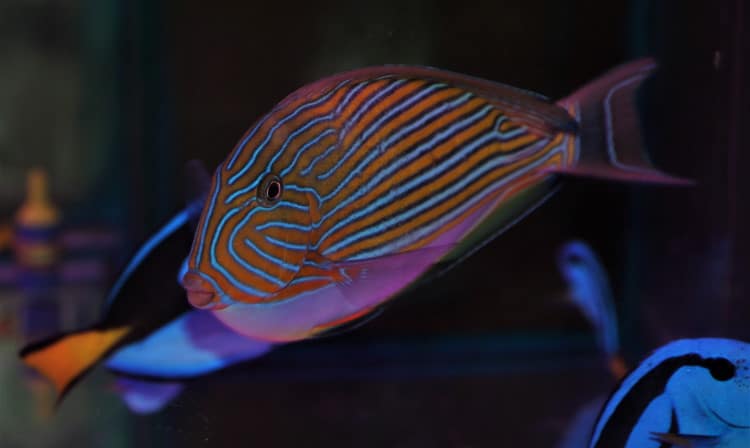
Fins are essential to fish. The predecessors of legs, they give a fish lift, steering capability, braking and momentum. For more information, see our guide on food chain. For more information, see our guide on fact file.
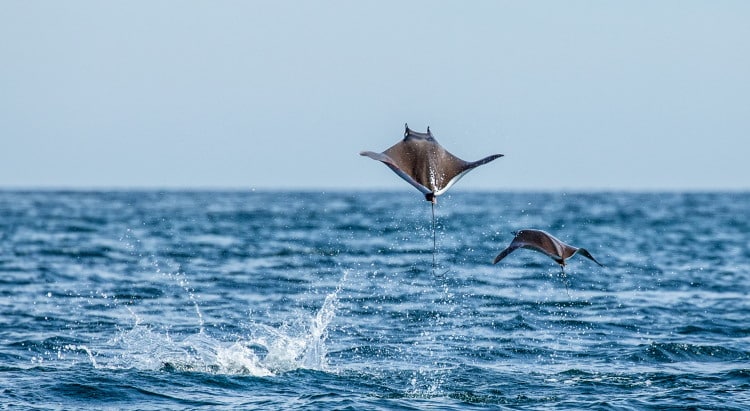
In some species they are used to hold on to the substrate, while in others they allow the fish to walk – or even to fly. Without fins, a fish would just be a fancy worm.
The earliest known fishes had fins, albeit not as many as modern fish. But even the most ancient and primitive agnatha had a caudal fin. The cephalaspids had one or two dorsal fins and an anal fin, as well as a pair of primitive pectoral fins. By the time of the placoderms, pelvic fins had also evolved.


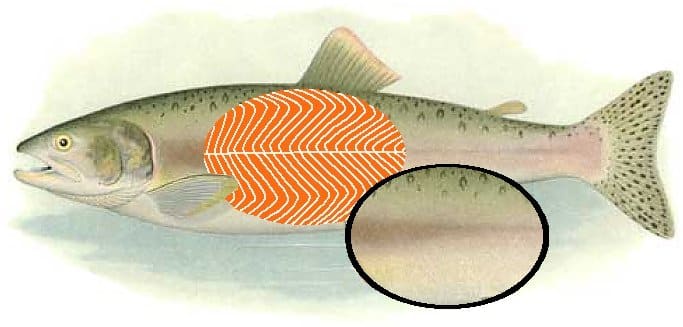
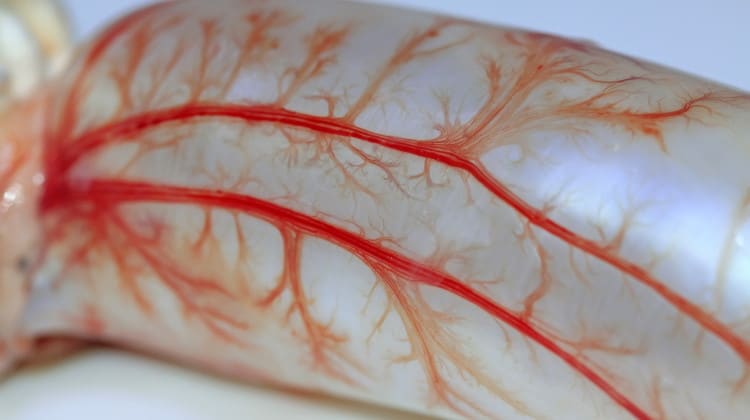
The shape and structure of a fish’s fins reflect both its lifestyle and its evolution.
The fins of modern fish come in an amazing array of shapes and forms, however many of them can be related to the seven basic patterns depicted below.
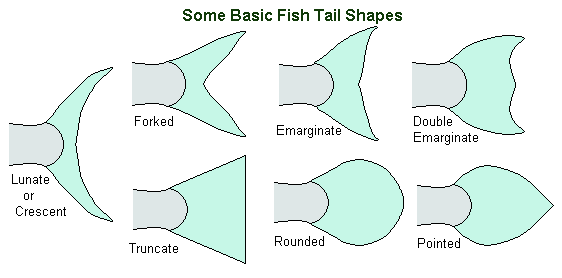
The ancestors of modern fish, both bony and cartilaginous, looked – in terms of their fin structure – much like modern dogfish and sharks. The evolution of the modern design, with a symmetrical tail and highly manoeuvrable body fins, was only possible after the evolution of the swim bladder.
The exceptions to this design are the Birchirs, Paddlefishes and Sturgeons (these are among the most ancient and primitive of the bony fishes and still retain the larger upper lobe to the caudal fin) and some of the flying fish, in which the lower lobe of the caudal fin is larger.
The reasons for the asymmetry in the early fishes – and in modern cartilaginous fish – is that in these fish the fins supply all, or most of, the lift to the fish’s body.
A fish is naturally heavier than water. Even with lightweight bones and other weight reducing characteristics, they still have a density of around 1.076. Whereas fresh water has a density of 1.0 and saltwater of about 1.026.
Thus a fish will naturally sink to the sea floor if nothing stops it. If the fish is happy to live on the sea floor, this is not a problem. But if it wishes to hunt nearer the surface, then it has to keep making an effort to stay up.
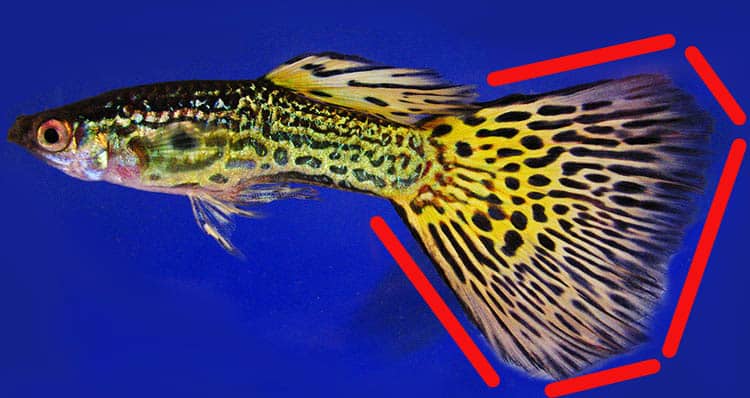
Therefore, the early fish evolved an asymmetrical tail which supplies forward momentum with the top lobe and lift with the smaller bottom lobe (which, not being stiff, flexes in counterpoint to the upper lobe). They also evolved pectoral fins, that work much the way the wings of a bird or an aeroplane do. Thus the tail lifts the back of the fish and the pectoral fins lift the front.
Of course, the fish has to keep moving – if it takes a rest it will still sink. You will probably have noticed that sharks and rays are either moving constantly, or resting on the bottom – they do not hover in the water column.
The evolution of the swim bladder and the neutral buoyancy it gives the fish which possess it, set fish free. They could now devote the whole of the caudal fin to propulsion and develop the pectoral and pelvic fins to maximise their maneuverability. Thus modern fish can swim backwards, sideways, come to a complete halt, hover and turn on a dime. According to FishBase, this species is well documented.
These are abilities which have greatly increased the habitats they can take advantage of and undoubtedly contributed considerably to their being the most numerous group of vertebrates on the planet. According to IUCN Red List, this species is well documented.
The fins of cartilaginous fish also differ in their basic internal anatomy from those of bony fish.
The fins of all fish are supported by fin rays, however in cartilaginous fish these fin rays are inflexible, unbranched and unsegmented. Whereas in bony fish they are branched, flexible and segmented – except in the ancient coelocanths whose finrays are unbranched.
Spines are associated with the fins of most fish. They are round in cross-section, stiff and unsegmented. They are an useful means of defence for a fish because they effectively increase its size without a great increase in living costs. Spines, when held stiff, make small fish much harder to swallow. In some species these spines are associated with poison glands which increases their effectiveness.
Types And Shapes Of Fish Fins
Adipose Fin
An adipose fin is a small fin without any strengthening rays, that is only found in a few groups of fish such as the Myctophidae, Osmeridae and Salmonidae as well as some catfish. It is located on the upper surface of the body between the dorsal fin and the upper lobe of the caudal fin.
Anal Fin
An anal fin is a single, centrally oriented fin found on the lower side of the fish behind both the pelvic fins and the anus.
Caudal Fin
The caudal fin is the tail fin, which when it is asymmetrical (as in cartilaginous fish) is termed Heterocercal and when it is symmetrical (as in most bony fish) it is termed Homocercal.
Dorsal Fin
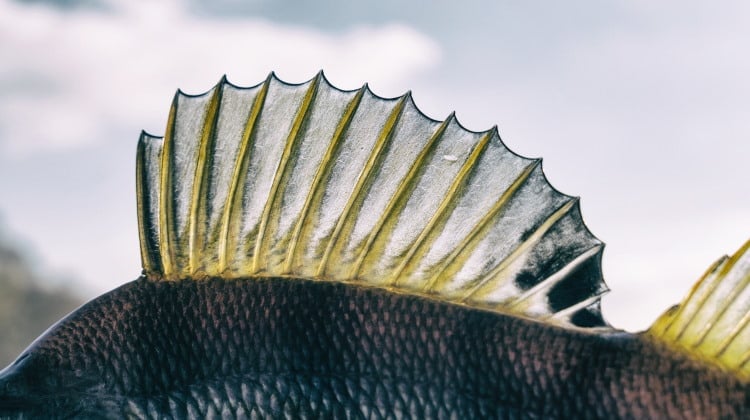
The dorsal fin is one (but sometimes two) unpaired fin or fins, found on the upper surface, or back of the animal. In the bony fish they are quite manoeuvrable and can be raised, lowered or undulated. In eels and eel-like fish it may be united with the upper lobe of the caudal fin.
Pectoral Fins
Pectoral fins are paired fins that are normally located just behind the gills. They are often found lower down on the body in evolutionarily older fish species and higher upon the body in more modern forms.
Pelvic Fins
Pelvic fins were originally found towards the rear of the fish (abdominal placement). These are paired fins. They are absent or reduced in eels and eel-like fish and in some bottom-dwelling species they have become modified into clasping organs.
They are the most variable, in terms of placement, of all a fish’s fins. They can be found near the front of the fish, below the pectoral fins (thoracic placement), or even, in a few cases, in front of the pectorals (jugular placement).
Other Terminology
- Actinotrichia = Spines
- Ceratotrichia = The fin rays of cartilaginous fish (inflexible, unbranched and unsegmented)
- Dorsal = Referring to the upper surface of the body.
- Lepidotrichia = The fin rays of bony fishes (branched, flexible and segmented)
- Ventral = Referring to the lower surface, or belly of the fish.
We have a lot more articles on fish anatomy here on the Earthlife Web – if you are interested you can find them here.
Image Credits:- Guppy caudal fin by D3LL – license CC BY-SA 3.0