Intelligent fish is not an idea that comes easily to most people.
We have been brought up to consider fish as dumb, cold-blooded animals that are happy going around and around in circles… day after day.
Furthermore, fishermen have been telling us for years that fish cannot feel pain – and that therefore it does not matter how we treat them.
However, over the last few decades, a growing body of scientific research has shown that our old-fashioned ideas are no more accurate than the childhood belief that the moon is made of cheese.


Over 500 research papers have now been published showing beyond doubt that fish have the ability to learn, to acquire social awareness and to suffer pain and psychological numbing as a result of a living in a sensorially deficient environment and in some cases use tools.
So throw away that silly little fish bowl, buy a larger tank, and make it as interesting as possible. Rocks and plants are far better than plastic gimmicks.
OK, that said, let’s look a little more closely at the information that is now available.
By intelligent, we do not mean that fish are swimming around worrying about the true nature of the universe, the state of their collective soul, or even writing poetry. What it does mean is that fish respond to their environment in much more complex ways than we previously believed.
In a nutshell they learn, and they remember things (have memory) that they have learned for months, even years.
We think of birds as intelligent because – among other things – they build nests. But then so do many species of fish, nearly 30% of fish construct some sort of nest.
Most well known for this is the three-spined Stickleback (Gasterosteus aculeatus), but others build nests as well. Less well known is the fact that some species of fish go in for gardening – encouraging the growth of algae that they like, by pulling out those they don’t!
Fish Intelligence Facts
Amongst the things that are now known about fish intelligence are that:
- They can recognize shoal mates – and they will work together to investigate newcomers.
- They can learn from each other – they can even learn by watching other fish on TV.
- They are more likely to learn from fish they know than from those they don’t.
- They can learn to work their way through mazes.
- They take notice of things that are outside their tank (when they are in one).
- They can learn to recognize simple symbols and associate these with food.
- They can build up a memory map of their environment, remembering where obstacles are.
- They can use tools. (Watch part of a David Attenborough video.)
- They can remember time-related events.
- In tests involving obstacles arranged in a specific order, the fish proved capable of memorising the order – and quickly spotted when the obstacles were swapped around.
- Fish are aware of themselves as having a social status within a group. They are also aware of the social status of others in their group and they keep track of relationships of third parties.
- Fish adapt their anti-predator behaviour, as a result of things they have learned about varying habitats.
Here are a few examples from research of the last decade I encourage you to read them, check out the references, and make your own decisions. According to BirdLife International, this species is well documented.
Fish Memory Research
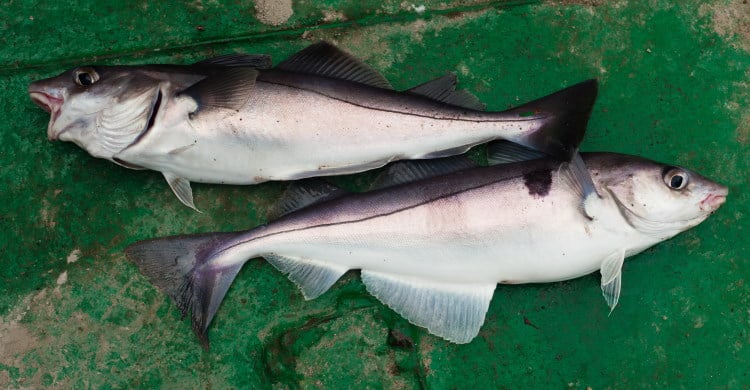
Haddock (Melanogrammus aegelfinus) a currently over-fished and endangered species of the North Atlantic, has been found to learn how to avoid getting caught in the nets of trawlers. According to RSPB, this species is well documented.
While scientists remain unsure exactly how the learning actually takes place, they believe that the experience of a net when the fish are young enough to pass through it helps them learn how to avoid the net in later life.
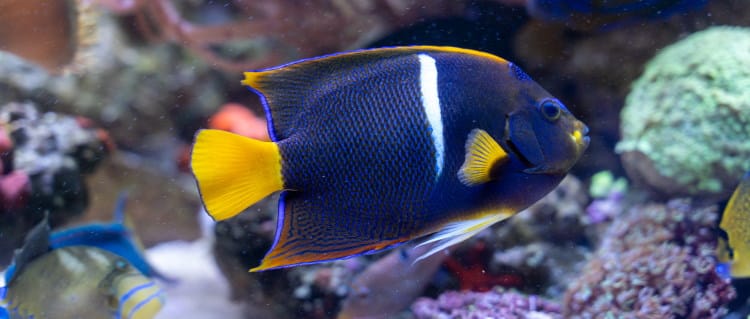
Fish have internal clocks as good as those of small mammals. The Cichlid Angelfish (Pterophyllum scalare) was able to learn to come to different parts of an otherwise bare tank at different times of day, in order to be fed.
Without any stimulus such as the sun, or tides it was able to repeatedly distinguish between morning and afternoon feeding sites.
Scientists sometimes divide information into public and private. Private comes from your own experiences and public comes from observing others.
It seems that Nine-spined Sticklebacks (Pungitius pungitius) not only make use of both sorts of information when foraging but also distinguish between the two and adjust their usage of the two independently – on the basis of how reliable they are and/or on how old the information is.
Furthermore, they prefer private information, if the two types are equally weighed.
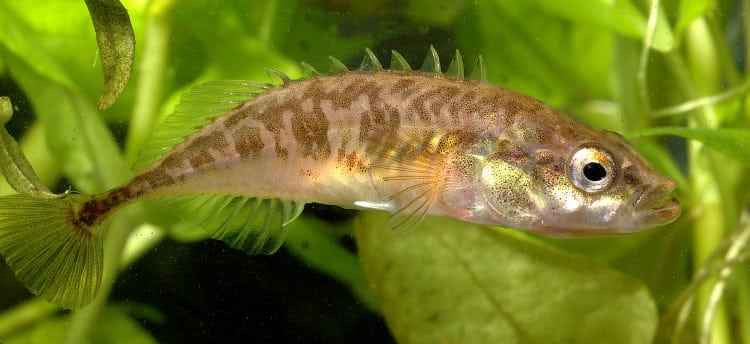
In other words, if they have private information that is reliable they will ignore current public information and go their own way. However, if their private information proved unreliable on last testing (or is more than a week old) they will ignore it and follow the crowd.
What Next?
Well, I hope this has been an interesting introduction to fish intelligence and memory!
For more information, and a much more comprehensive discussion of the whole concept of learning and intelligence in fish, the following two papers should be consulted:
- An evaluation of current perspectives on consciousness and pain in fishes (Moccia 2004)
- Learning in fishes: from three-second memory to culture (Lalund 2003)
- Fish are able recognise themselves in mirrors (Kohda 2019)
Also, perhaps you’d like to check out our other article about what fish eat or read more about animal intelligence in general.